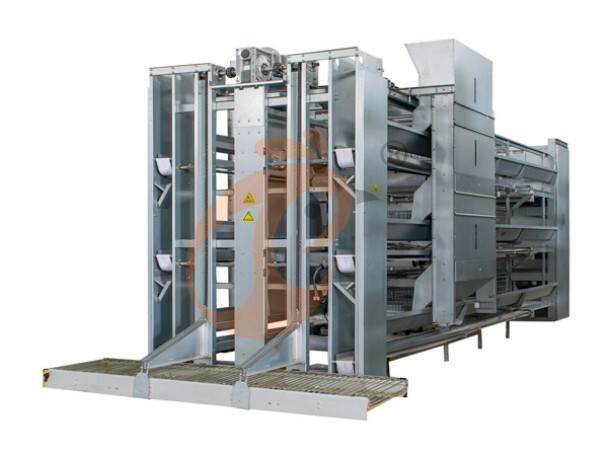
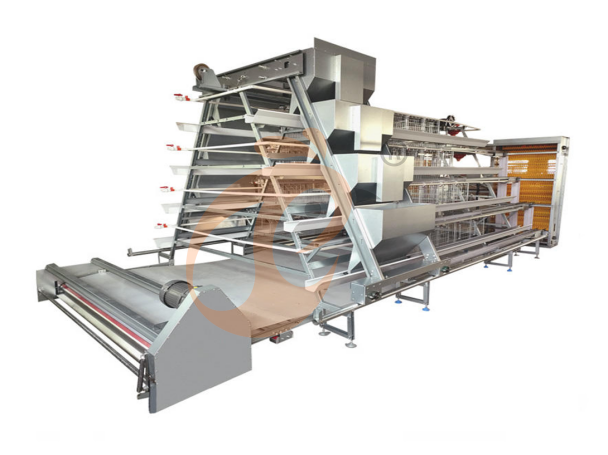
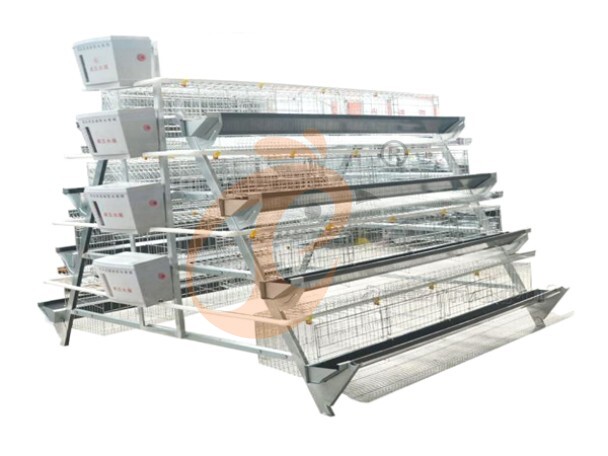
A type poultry cage system can support commercial layer production for 15–25 years when engineering, materials, and maintenance are properly coordinated, creating a durable foundation for profitable poultry operations.
Automatic layer cage system integration connects feeding, drinking, egg collection, and manure handling, reducing repetitive labor while keeping daily production organized and measurable.
Galvanized poultry cage system construction helps resist moisture, manure exposure, and cleaning conditions, protecting structural performance across demanding commercial housing environments.
Steel selection, galvanization, structural engineering, environmental control, and maintenance jointly determine service life, while practical farm parameters such as 3–4 cage tiers and 350–450 mm service clearance support efficient equipment planning.
Long-term value comes from stable production, controlled maintenance, integrated automation, and project-specific engineering, making properly specified poultry cage equipment a strategic infrastructure investment.
Get professional poultry farm construction guidance, equipment selection solutions, and the latest price lists, whatsApp to +8618830120193, click to learn more
The Real Service Life Of An A Type Poultry Cage System
An A type poultry cage system is a long-term production asset rather than a simple chicken housing product.
A professionally engineered system can support commercial layer operations for many production cycles when material selection, corrosion protection, structural design, and farm management work together.
Industry references commonly place properly manufactured galvanized systems within a 15–25 year operating range, although actual performance depends strongly on farm conditions.
For commercial investors, durability also means maintaining stable egg handling, feeding, drinking, and manure management without repeated structural replacement.
An automatic layer cage system can integrate core production processes while maintaining approximately 90–95% operational coordination between major equipment sections.
Steel Grade: The First Durability Foundation
The cage frame carries continuous mechanical loads from birds and integrated equipment.
Our A type poultry cage solutions use engineered steel components selected for commercial production environments, while precision fabrication helps maintain dimensional consistency.
A galvanized poultry cage system can also be specified with connection tolerances around 0.8–1.5 mm to support consistent assembly across extended cage rows.
Data is for reference only.Swipe horizontally to view full table.
A stronger frame reduces progressive deformation around cage connections and supports consistent operation throughout long production schedules.
Galvanization: The Second Durability Factor
Corrosion is one of the most important threats inside a poultry house because manure, moisture, washing water, and ventilation conditions continuously interact with exposed metal.
Hot-dip galvanization creates a metallurgically bonded zinc layer and is widely selected for long-term poultry equipment.
Professional A type poultry cage system manufacturing can maintain surface preparation within approximately 0.5–1.0 mm process tolerance before protective treatment.
Data is for reference only.Swipe horizontally to view full table.
Our production strategy focuses on protective treatment appropriate for intensive layer farming, helping customers reduce corrosion-related repairs and extend equipment replacement intervals.
Structural Engineering: Designed For Continuous Production
Durability is not determined by steel alone.
Cage geometry, welding accuracy, connection design, and load distribution influence how mechanical stress develops over years of operation.
Engineering Sequence
Load → distribution → reinforcement → precision welding → inspection → installation
Our A type poultry cage system is engineered around this sequence.
Precision welding helps stabilize cage connections, while reinforced support points distribute operational forces across the complete structure.
A practical system can also be configured with 3–4 cage tiers and 350–450 mm service clearance, allowing equipment integration without unnecessarily concentrating mechanical stress.
Environmental Conditions: The Hidden Durability Factor
A poultry cage operates inside a chemically active environment.
Humidity, ammonia, water leakage, ventilation, and manure accumulation can accelerate surface deterioration.
Farm engineering therefore has a direct relationship with equipment life.
For an automatic layer cage system, maintaining house temperature around 18–24°c and relative humidity near 60–70% can support more controlled operating conditions.
Data is for reference only.Swipe horizontally to view full table.
Professional ventilation, manure removal, and drinking-line management should therefore be considered part of the poultry equipment investment rather than separate infrastructure.
Automation Protects The Cage Investment
Automatic equipment can improve durability when correctly integrated.
Smooth feeding reduces unnecessary vibration, while controlled manure removal limits prolonged contact between corrosive waste and cage components.
For example, an automatic feeding system can operate with 1.2–1.8 m/s conveying speed, while a manure removal configuration can be engineered around 0.8–1.4 m/min belt movement.
An A type poultry cage system can further use approximately 40–60 mm feeder clearance to maintain practical bird access and equipment coordination.
Our equipment packages integrate cage structures with feeding, drinking, egg collection, and manure management so the complete system works as one engineered production line.
Maintenance: Turning Equipment Quality Into Long-Term Value
A durable cage still requires systematic maintenance.
The objective is not to replace components frequently, but to identify small problems before they develop into structural failures.
A galvanized poultry cage system benefits from documented inspection procedures, with maintenance records typically organized by house, cage row, component, and replacement date.
Data is for reference only.Swipe horizontally to view full table.
A professional manufacturer should provide installation guidance, spare-parts recommendations, and maintenance documentation rather than simply delivering cage components.
Durability And Total Cost: Think Beyond Purchase Price
The cheapest cage is not necessarily the most economical cage.
A system that requires repeated repairs can create labor expenses, production interruptions, and replacement costs.
For a commercial A type poultry cage system project, labor planning can represent 8–12 technicians during major installation phases, depending on house dimensions and automation scope.
Investment → installation → production → maintenance → long-term value
Data is for reference only.Swipe horizontally to view full table.
For farms planning long-term layer production, purchasing based on total ownership cost provides a more realistic investment comparison.
Any currency conversion used in commercial budgeting should follow current exchange rates; European union standard reference only.
Why A Type Cage Systems Suit Commercial Layer Farms
Investment → installation → production → expansion
A type systems offer a practical combination of structural stability and straightforward farm organization.
Their configuration can accommodate commercial layer houses while leaving room for customized feeding, drinking, ventilation, and manure solutions.
Our factory-direct approach allows the A type poultry cage system configuration to be matched with farm dimensions, bird capacity, building structure, and automation requirements instead of forcing customers into a standardized package.
Typical commercial planning can accommodate house lengths exceeding 100 m, allowing equipment layouts to be developed around actual building geometry.
Four Durability Factors At A Glance
Durability depends on coordinated engineering rather than one isolated material characteristic.
Steel quality establishes the structural foundation, while surface treatment protects exposed components from aggressive housing conditions.
Structural engineering controls mechanical loading, and environmental management reduces avoidable corrosion pressure.
Data is for reference only.Swipe horizontally to view full table.
These four factors interact continuously.
Improving only one component cannot compensate for poor engineering elsewhere.
How To Select A Durable System
Step 1 — Capacity
Define flock size and house dimensions.
Step 2 — Configuration
Select the cage configuration according to production capacity.
Step 3 — Material
Match steel and surface-treatment specifications to the farm environment.
Step 4 — Integration
Integrate feeding, drinking, egg collection, ventilation, and manure systems.
Step 5 — Commissioning
Establish inspection and spare-parts procedures before commissioning.
Our engineering team can develop a complete automatic layer cage system around the customer's house layout, production target, and automation requirements, making equipment durability part of the original project design rather than an after-sales correction.
Frequently Asked Questions
Q1: How long can an A type poultry cage system last?
A1: A properly engineered system can operate for approximately 15–25 years, while actual service life depends on steel quality, corrosion protection, farm environment, installation accuracy, and maintenance frequency.
Q2: What makes a poultry cage system more durable?
A2: Appropriate structural steel, protective galvanization, accurate welding, controlled house conditions, and scheduled inspections form the main durability framework.
Q3: Can automation improve long-term cage performance?
A3: Yes.Integrated feeding, drinking, egg collection, and manure systems can reduce manual handling and mechanical disturbance, with automated equipment commonly operating for 8–12 hours across scheduled daily production cycles.
Taiyu (HK) Group - One Of China Largest A Type Poultry Cage System Manufacturer
A type poultry cage system combines galvanized structural cages with engineered feeding, drinking, egg collection, and manure-management integration for commercial layer production projects.
Global factory-direct supply provides poultry equipment with configurable specifications, production support, export packaging, and project coordination for customers across international markets.
Poultry equipment solutions cover cage systems, automatic feeding, drinking lines, egg collection, manure handling, ventilation integration, and supporting farm infrastructure.
Turn-key engineering coordinates capacity calculation, layout planning, equipment manufacturing, shipment, installation guidance, commissioning, and technical documentation through one project structure.
Factory engineering capability supports project-specific dimensions, automation levels, bird capacity, and equipment combinations for scalable commercial poultry farm development.
Contact Us To Received Your Customized Poultry Farm Plan
Headquarters And Branchs

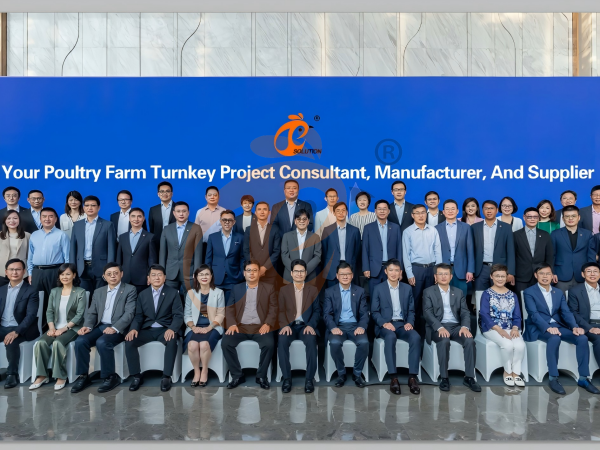
Hong Kong Headquarter Management Team
Hong Kong Headquarter Taiyu Industrial Group CO., LTD
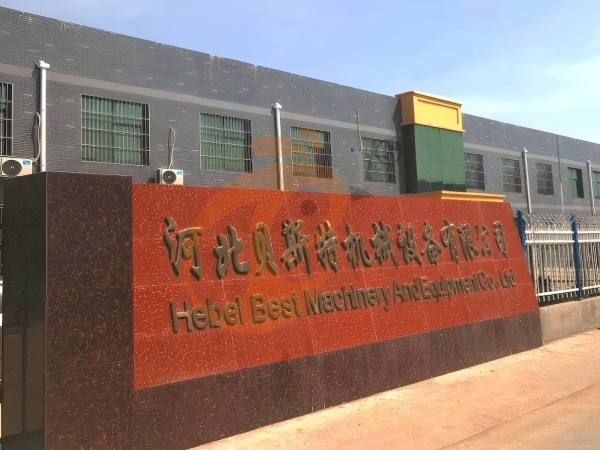
China Hebei Best Machinery And Equipment CO., LTD
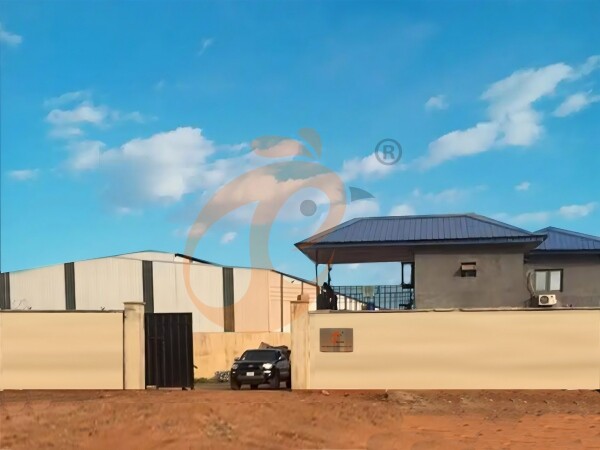
Nigeria Vanke Machinery And Equipment CO., LTD
Tanzania Best Machinery And Equipment CO., LTD
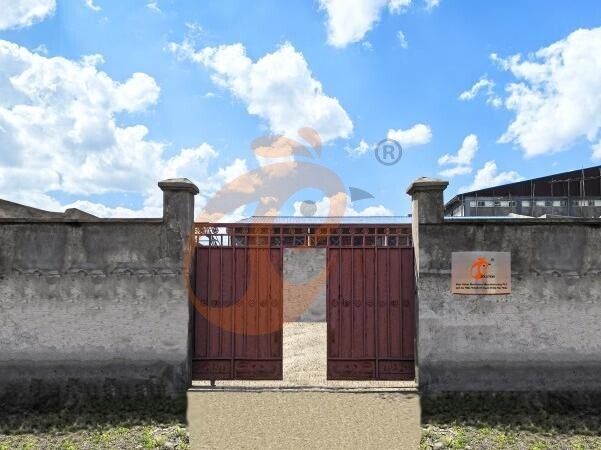
Ethiopia Best Hebei Machinery Manufacturing PLC




Reception /24 WhatsApp NO. : +8618830120193
MESSAGE
Products recommended
 HK Headquarter Offers EU-standard Poultry Farm Solutions, Manufacture Poultry Farm Equipment1. Continuous communication with the EU and the US
2. China, Nigeria, Ethiopia, Tanzania branch companies and factories
3. The products’ quality is customized for local poultry farms
4. Poultry cage and poultry farm equipment stock for sale
5. 24 online reception Whatsapp NO. : +8618830120193,contact us to get full informationRead More China Branch Offer Poultry Farm Business Plan, Manufacture Poultry Farm Equipment1. Address: Flat/RM 2416, 24/F, Runxing Building, Youyi Nan Street, Shijiazhuang City, Hebei Province, China
2. Poultry cage and poultry farm equipment factory and stock for sale
3. Customized for local poultry farms
4. Quality and design are based on Euro
5. 24 online reception Whatsapp NO. : +8618830120193Read More Nigeria Branch Offer Poultry Farm Business Plan, Manufacture Poultry Farm Equipment1. Address: After Sinoma Office, 200 Meters Near Danco Filling Station, Lagos/Ibadan Expressway, Lagos State, Nigeria
2. Poultry cage and poultry farm equipment factory and stock for sale
3. Customized for Nigerian poultry farms
4. Quality and design are based on Euro
5. 24 online reception Whatsapp NO. : +8618830120193Read More Ethiopia Branch Offer Poultry Farm Business Plan, Manufacture Poultry Farm Equipment1. Address: Gelan Gura, Akaki-kaliti Sub City, Addis Ababa, Ethiopia
2. Poultry cage and poultry farm equipment stock for sale
3. Customized for Ethiopian poultry farms
4. Quality and design are based on Euro
5. 24 online reception Whatsapp NO. : +8618830120193, contact us to get price listRead More Tanzania Branch Offer Poultry Farm Business Plan, Manufacture Poultry Farm Equipment1. Address: No.8, Sova Road, Msufini, Mlandizi, Kibaha, Pwani, Tanzania
2. Poultry cage and poultry farm equipment factory and stock for sale
3. Customized for Tanzanian poultry farms
4. Quality and design are based on Euro
5. 24 online reception Whatsapp NO. : +8618830120193Read More Automatic H Type Layer Battery Cage System1. 30,000-100,000+ layers/house chooses it
2. Structure type stacked 3-16 tiers range
3. Stocking density up to 17 birds/cage
4. Service life 25 years
5. Reception /WhatsApp NO. : +8618830120193Read More Automatic A Type Layer Battery Cage System1. 10,000-30,000+ layers/house chooses it
2. Lifespan 25+ years
3. Labor requirement 1 worker per 10,000 birds
4. Reduce disease rates by 15%-20%.
5. Reception /WhatsApp NO. : +8618830120193Read More Semi Automatic A Type Layer Battery Cage System1. 1,00-10,000+ layers/house chooses it
2. Egg breakage rate≤ 0.5%
3. Mesh spacing 2.5×2.5 cm
4. Egg collection floor slope 7–8°
5. Reception /WhatsApp NO. : +8618830120193Read More