Automatic poultry cage system budgeting starts with bird capacity, automation scope, and project engineering, with 1,000–100,000+ birds requiring distinctly different equipment strategies.
Automatic layer cage system costs depend on feeding, drinking, manure, egg collection, environmental control, electrical integration, shipping, and installation requirements.
Six budget levels provide practical planning references from approximately us$3.8 to us$8.7 per bird before project-specific adjustments and commissioning expenses.
Poultry cage equipment selection also affects labor organization, building utilization, material flow, maintenance planning, and future expansion possibilities.
A properly engineered system combines cage durability, automated workflows, technical support, and scalable design into one commercially focused farm investment.
Get professional poultry farm construction guidance, equipment selection solutions, and the latest price lists, whatsApp to +8618830120193, click to learn more.
The Price Is Calculated Per Bird, Not Just Per Cage
An automatic poultry cage system does not have one universal price.
For commercial layer projects, a practical budgeting method is to calculate equipment investment against bird capacity.
Published industry examples place fully automatic systems around us$6.3–8.7 per bird, depending on configuration, while steel prices and automation scope can materially change the final quotation.
European union standard reference only.
For example, a 10,000-layer project using a planning figure of us$7.20 per bird would allocate approximately us$72,000 to the equipment package.
The final quotation should be engineered from the farm layout, cage model, automation package, electrical configuration, shipping distance, and installation requirements.
A professional automatic layer cage system can also be configured around house widths from approximately 12 to 20 meters.
Six Budgets For Different Farm Investment Plans
Data is for reference only.Swipe horizontally to view full table.
These figures are planning benchmarks rather than fixed quotations.
A supplier should calculate actual equipment quantity from the number of tiers, rows, house length, cage section, and collection routes.
Published system data also show that fully automatic poultry cage equipment can be configured across different capacities and layouts.
Build The Production Base First
Cage structure
→ Automatic feed delivery
→ Nipple drinking
→ Expandable equipment layout
At the first two budget levels, the investment strategy centers on reliable core equipment rather than unnecessary system complexity.
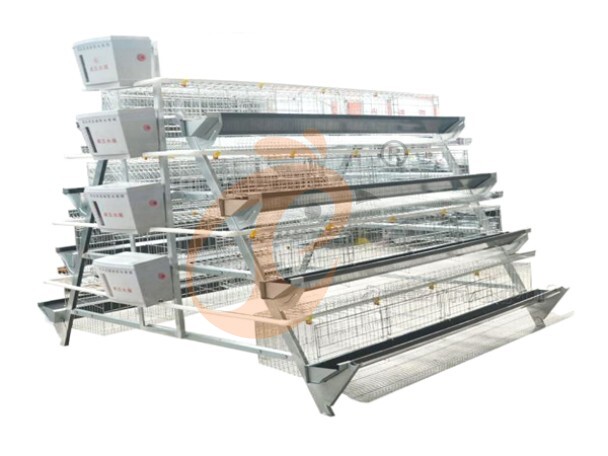
A standard A-type configuration, for example, can use a 1,950 × 350 × 380 mm cage section and accommodate different tier arrangements.
One published configuration provides 90 birds per set at three tiers and 120 birds at four tiers.
For a poultry equipment company, modular engineering matters because future rows, manure equipment, and egg conveyors can be incorporated without redesigning the entire production platform.
Technical Parameters For The Cage Structure
Data is for reference only.Swipe horizontally to view full table.
These specifications are consistent with commercially available A-type automatic layer cage system configurations using galvanized q235 steel and multiple tier arrangements.
Galvanized structural components can support extended service requirements under controlled house conditions.
Cage-section modularity also simplifies transportation, assembly sequencing, and replacement planning during farm operation.
Where Automation Starts Paying Back
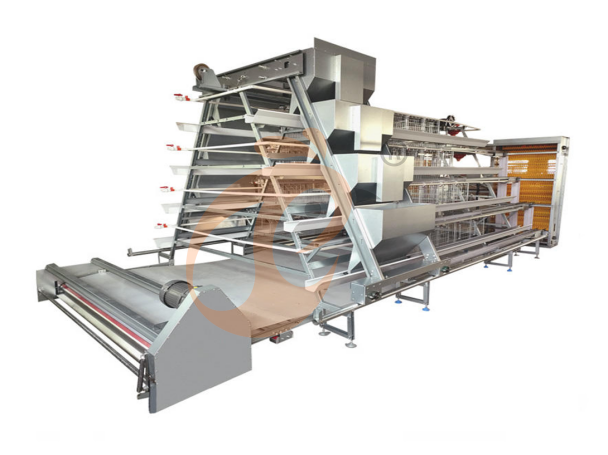
Level 3 is the point where automatic poultry cage system equipment begins working as a coordinated production system rather than separate cage accessories.
Consider the daily workflow
Feed storage → feed conveyor → cage trough → nipple line → manure belt → collection area
A properly integrated design removes repeated manual movement between these stages.
One commercial configuration specifies automatic feed delivery, nipple drinking, pvc manure belts, and programmable cleaning cycles of 2–4 times per day.
For investors, the important question becomes how many working hours can equipment remove from the daily routine?
A cage supplier should therefore provide both the equipment quotation and a labor-oriented farm layout.
Level 3–4 Equipment Configuration
Data is for reference only.Swipe horizontally to view full table.
Published specifications for commercial systems include 12–15 cm feed troughs, 0.5–1 m/min manure-belt speeds, and 8–10 ml/min nipple flow rates.
Actual values should be matched to the selected poultry cage equipment model.
Electrical control should also account for approximately 30–40% spare circuit capacity during project planning.
Why Level 4 Is A Different Investment
A Level 4 farm should be designed around continuous material movement.
Eggs move from the cage to the egg belt.
Manure moves downward to the manure belt.
Feed moves from storage toward each row.
Water moves through regulated drinking lines.
The cage supplier's job is to make these four flows operate without interfering with one another.
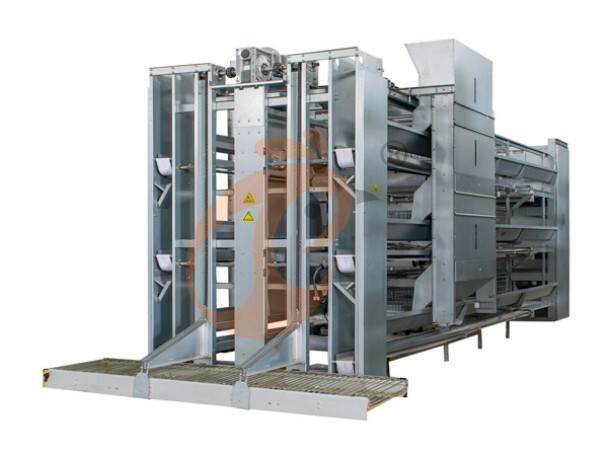
For example, an H-frame automatic poultry cage system can be configured with 3–8 tiers, while commercial project examples are designed for houses ranging from 30,000 to more than 100,000 layers.
This engineering approach allows customers to purchase a production system rather than simply a quantity of cages.
Level 5–6: Integrated Commercial Automation
Data is for reference only.Swipe horizontally to view full table.
H-type systems are commonly designed for multiple vertical tiers and can integrate feeding, drinking, egg collection, manure removal, ventilation, and lighting controls.
For a large commercial farm, the automatic layer cage system quotation should therefore include complete electrical and mechanical interfaces instead of pricing each cage independently.
A centralized control architecture can also coordinate operating sequences across multiple production rows.
The Cost Equation For A Commercial Layer Farm
Use the following calculation before requesting quotations:
Total Equipment Cost
= Cage System
- Feeding system
- Drinking system
- Manure removal
- Egg collection
- Environmental control
- Electrical control
- Installation
- Spare parts
Then divide the result by the planned bird population.
A 50,000-bird farm with a us$7.80 equipment allocation per bird produces a preliminary equipment budget of us$390,000.
European union standard reference only.
This calculation provides a more useful comparison between suppliers than comparing the price of one cage section.
A professional poultry cage equipment quotation should identify installation scope, commissioning requirements, and replacement-part provisions separately.
What A Professional Supplier Should Put In The Quotation
Data is for reference only.Swipe horizontally to view full table.
A transparent quotation lets customers compare suppliers on engineering content instead of comparing only the final number.
Equipment documentation should identify motor specifications, electrical drawings, assembly instructions, and replacement-part codes.
Such documentation reduces commissioning ambiguity when multiple production rows are installed.
Level Selection Should Follow Your Expansion Plan
If the farm begins with 1,000–5,000 birds
Build the cage layout around modular expansion.
If capacity reaches 10,000–20,000 birds
Add automatic manure and egg handling to reduce repeated manual work.
If capacity reaches 50,000 birds
Coordinate cage rows, conveyors, environmental controls, and electrical systems from the initial design.
If capacity exceeds 100,000 birds
Use a complete project-engineering approach covering equipment layout, material flow, control architecture, installation, and commissioning.
The objective is not to purchase the most expensive configuration.
The objective is to select equipment matching production scale and expansion schedule.
Turn The Budget Into A Complete Poultry Equipment Solution
Data is for reference only.Swipe horizontally to view full table.
The cost of an automatic poultry cage system should ultimately be evaluated through cost per bird, equipment configuration, engineering quality, and service scope rather than cage price alone.
For poultry equipment manufacturers, the strongest commercial proposition is a complete solution cage design, automatic feeding, nipple drinking, manure removal, egg collection, environmental control, electrical integration, installation guidance, and after-sales support.
When suppliers design these components as one system, customers receive more than cages: a production platform engineered around capacity, building dimensions, labor structure, and expansion objectives.
Frequently Asked Questions
Q1: What is the typical automatic poultry cage system cost per bird?
A1: A practical planning range is approximately us$3.8–8.7 per bird, while actual pricing depends on cage configuration, automation scope, project capacity, and installation requirements.
Q2: Which automation should be added first?
A2: Feeding and drinking normally establish the core workflow, followed by manure removal and egg collection as farm capacity increases.
Q3: How should A 50,000-bird project be budgeted?
A3: A planning figure of us$7.80 per bird gives approximately us$390,000 for equipment before project-specific additions, shipping, and commissioning.
Taiyu (HK) Group - One Of China Most Famous Automatic Poultry Cage System Manufacturer
Automatic poultry cage system integrates cage structures, automated material handling, environmental interfaces, and control architecture into a production-oriented layer housing platform.
Global factory direct sales coordinate manufacturing, technical documentation, equipment inspection, export preparation, and project-specific configuration through one poultry equipment supply chain.
Poultry equipment projects can combine cages, feeding, drinking, manure removal, egg collection, ventilation, electrical controls, and installation support according to capacity requirements.
Turn-key engineering connects farm layout, equipment arrangement, utility interfaces, commissioning procedures, operator requirements, and expansion planning into one technical project framework.
International project delivery supports capacity-based equipment selection, factory production scheduling, shipment coordination, installation guidance, spare-parts planning, and after-sales technical service.
Contact Us To Received Your Customized Poultry Farm Plan
Headquarters And Branchs

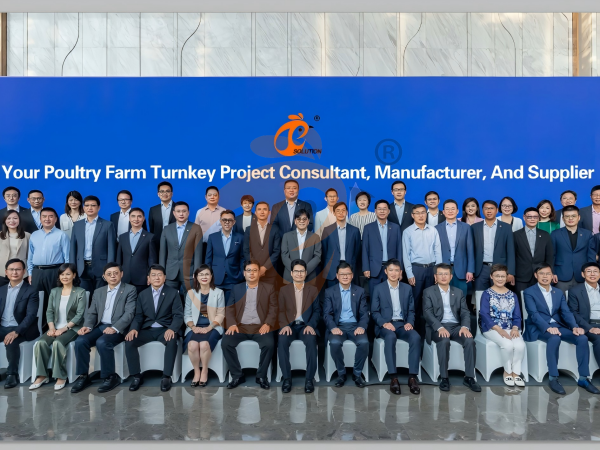
Hong Kong Headquarter Management Team
Hong Kong Headquarter Taiyu Industrial Group CO., LTD
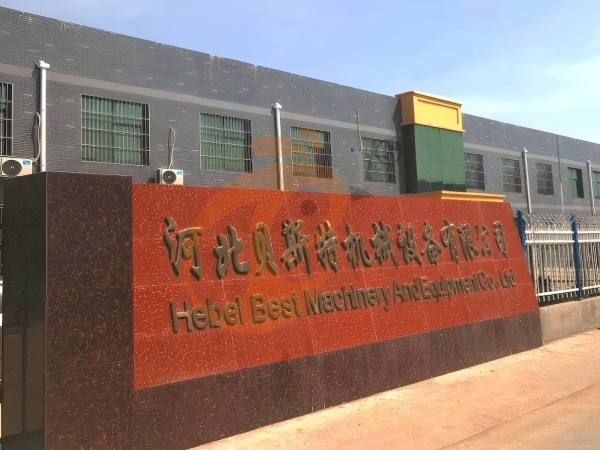
China Hebei Best Machinery And Equipment CO., LTD
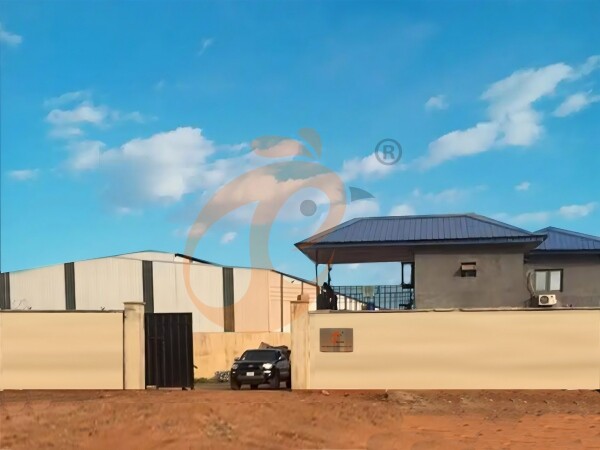
Nigeria Vanke Machinery And Equipment CO., LTD
Tanzania Best Machinery And Equipment CO., LTD
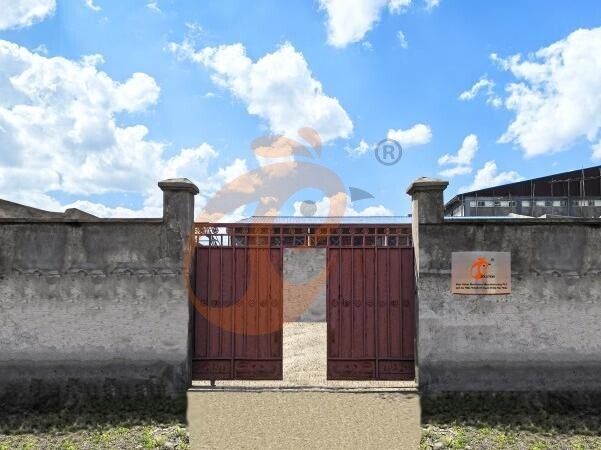
Ethiopia Best Hebei Machinery Manufacturing PLC




Reception /24 WhatsApp NO. : +8618830120193
MESSAGE
Products recommended
 HK Headquarter Offers EU-standard Poultry Farm Solutions, Manufacture Poultry Farm Equipment1. Continuous communication with the EU and the US
2. China, Nigeria, Ethiopia, Tanzania branch companies and factories
3. The products’ quality is customized for local poultry farms
4. Poultry cage and poultry farm equipment stock for sale
5. 24 online reception Whatsapp NO. : +8618830120193,contact us to get full informationRead More China Branch Offer Poultry Farm Business Plan, Manufacture Poultry Farm Equipment1. Address: Flat/RM 2416, 24/F, Runxing Building, Youyi Nan Street, Shijiazhuang City, Hebei Province, China
2. Poultry cage and poultry farm equipment factory and stock for sale
3. Customized for local poultry farms
4. Quality and design are based on Euro
5. 24 online reception Whatsapp NO. : +8618830120193Read More Nigeria Branch Offer Poultry Farm Business Plan, Manufacture Poultry Farm Equipment1. Address: After Sinoma Office, 200 Meters Near Danco Filling Station, Lagos/Ibadan Expressway, Lagos State, Nigeria
2. Poultry cage and poultry farm equipment factory and stock for sale
3. Customized for Nigerian poultry farms
4. Quality and design are based on Euro
5. 24 online reception Whatsapp NO. : +8618830120193Read More Ethiopia Branch Offer Poultry Farm Business Plan, Manufacture Poultry Farm Equipment1. Address: Gelan Gura, Akaki-kaliti Sub City, Addis Ababa, Ethiopia
2. Poultry cage and poultry farm equipment stock for sale
3. Customized for Ethiopian poultry farms
4. Quality and design are based on Euro
5. 24 online reception Whatsapp NO. : +8618830120193, contact us to get price listRead More Tanzania Branch Offer Poultry Farm Business Plan, Manufacture Poultry Farm Equipment1. Address: No.8, Sova Road, Msufini, Mlandizi, Kibaha, Pwani, Tanzania
2. Poultry cage and poultry farm equipment factory and stock for sale
3. Customized for Tanzanian poultry farms
4. Quality and design are based on Euro
5. 24 online reception Whatsapp NO. : +8618830120193Read More Automatic H Type Layer Battery Cage System1. 30,000-100,000+ layers/house chooses it
2. Structure type stacked 3-16 tiers range
3. Stocking density up to 17 birds/cage
4. Service life 25 years
5. Reception /WhatsApp NO. : +8618830120193Read More Automatic A Type Layer Battery Cage System1. 10,000-30,000+ layers/house chooses it
2. Lifespan 25+ years
3. Labor requirement 1 worker per 10,000 birds
4. Reduce disease rates by 15%-20%.
5. Reception /WhatsApp NO. : +8618830120193Read More Semi Automatic A Type Layer Battery Cage System1. 1,00-10,000+ layers/house chooses it
2. Egg breakage rate≤ 0.5%
3. Mesh spacing 2.5×2.5 cm
4. Egg collection floor slope 7–8°
5. Reception /WhatsApp NO. : +8618830120193Read More