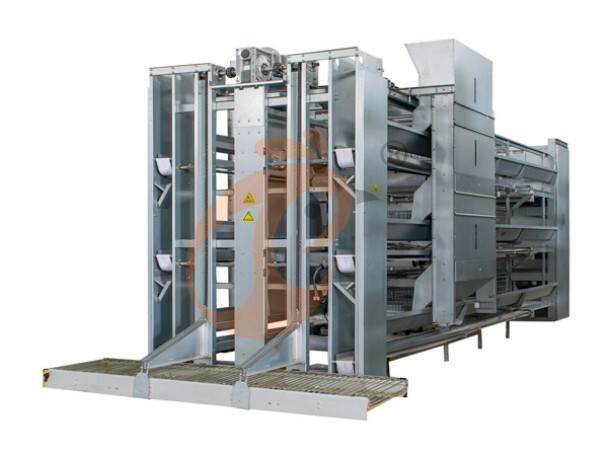
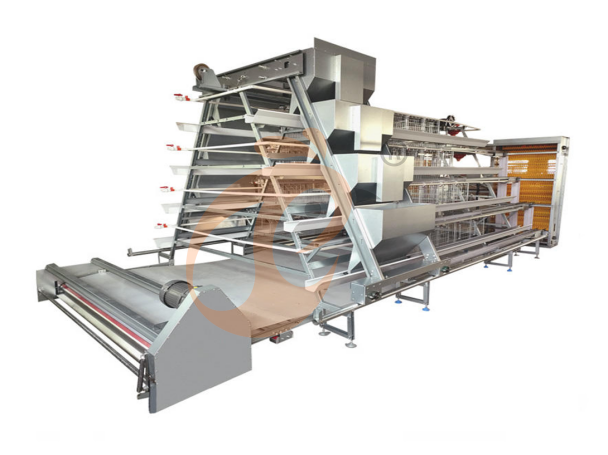
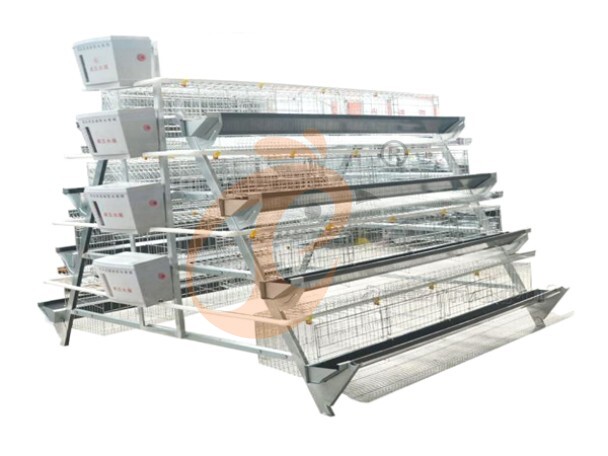
- Broiler chicken cage system design can connect housing, feeding, drinking, ventilation, manure handling and monitoring through one engineered production platform, with 2.0–2.4 m service aisles supporting practical operation.
Automatic broiler feeding system integration helps maintain predictable feed delivery while reducing repetitive labor, with 3–5 cage tiers allowing efficient equipment coordination.
Poultry house ventilation system control supports environmental stability through automated airflow management, while 24-hour equipment monitoring strengthens response to operating abnormalities.
Mechanical reliability matters because feeding, drinking and manure systems operate continuously, with 304 stainless-steel options supporting demanding poultry-house applications.
- Integrated broiler chicken cage system engineering transforms individual machines into one scalable solution, combining equipment planning, installation coordination and technical support for commercial farms.
Get professional poultry farm construction guidance, equipment selection solutions, and the latest price lists, whatsApp to +8618830120193, click to learn more.
Build The Right Cage Environment From Day One
Mortality reduction starts with cage-system engineering, not emergency treatment.
A properly designed broiler chicken cage system connects cage structure, feeding, drinking, ventilation, manure removal and environmental control into one operating system.
Commercial configurations can use 2.0–2.4 m service aisles and 3–5 cage tiers, providing practical access while using house space efficiently.
A modular broiler chicken cage system also simplifies daily inspection, while section-by-section assembly allows technicians to replace components without dismantling an entire cage row.
Data is for reference only.Swipe horizontally to view full table.
Upgrade Feeding Equipment To Prevent Feed-Access Problems
Think beyond the feeder.
A reliable automatic broiler feeding system must deliver feed consistently from the hopper to the final cage section.
Feed interruptions, uneven distribution and mechanical blockages can create competition between birds and increase management pressure.
Our broiler chicken cage system can integrate drive units, feed lines, hoppers and distribution components into one coordinated structure, while 304 stainless-steel components can support projects requiring improved corrosion resistance.
Data is for reference only.Swipe horizontally to view full table.
The commercial value is straightforward an automatic broiler feeding system reduces repetitive labor while creating a more consistent feeding routine.
Our broiler chicken cage system can be configured according to house length, cage tiers and production capacity, with independent drive sections available for larger installations.
Make Water Delivery A No-Surprise System
The operational sequence
Water source → filtration → pressure regulation → drinking line → nipple → monitoring → alarm
A reliable broiler chicken cage system should treat water delivery as one complete circuit rather than separate components.
A blocked filter or incorrectly adjusted regulator can affect an entire cage section before workers recognize the problem, making 50–100 l reserve capacity useful for short interruptions.
Our drinking equipment can incorporate stainless-steel nipple assemblies and independent pressure-control components, while the automatic broiler feeding system and drinking network can share coordinated house management.
Inspection points should remain accessible, and 50–100 l reserve capacity can provide additional operational protection during temporary supply interruptions.
Use Ventilation Equipment To Control The House Environment
Ventilation is one of the most important equipment-based tools for mortality prevention.
A professional poultry house ventilation system should coordinate exhaust fans, air inlets, sensors and controllers instead of depending entirely on manual operation.
Our broiler chicken cage system packages can connect ventilation controls with feeding and environmental management, while dual temperature sensors provide additional verification at critical house positions.
Data is for reference only.Swipe horizontally to view full table.
Instead of asking whether a house has enough fans, evaluate whether the poultry house ventilation system can measure, react and recover automatically.
A properly configured broiler chicken cage system can sequence ventilation according to production requirements, while dual temperature sensors support operational verification.
Remove Manure Efficiently: Design Around The Waste Stream
Manure is not just a cleaning issue it is an equipment-flow issue.
In a broiler chicken cage system, manure should move through a planned mechanical route instead of remaining dependent on manual handling.
Our manure-belt systems can transfer waste according to programmed schedules, while ±3 mm belt-tracking tolerance supports predictable mechanical movement.
Data is for reference only.Swipe horizontally to view full table.
A properly aligned broiler chicken cage system keeps manure transportation predictable, while inspection access every 15–20 m can simplify maintenance.
Belt direction, transfer points, drive positions and cleaning access should be finalized during engineering rather than improvised after installation.
Install Environmental Monitoring Instead Of Depending On Guesswork
The most advanced broiler chicken cage system is not necessarily the one with the most machines.
A stronger system is one where equipment can communicate operating conditions and identify abnormal events.
Our environmental controller can integrate temperature, humidity, ventilation, feeding and alarms through one interface, while 24-hour historical records help operators review recurring abnormalities.
Data is for reference only.Swipe horizontally to view full table.
This converts poultry house ventilation system management from reactive inspection into preventive control.
The integrated broiler chicken cage system can also connect critical alarms with backup power, while 24-hour historical records provide practical evidence for troubleshooting.
Protect Birds Through Better Cage Design
Six design decisions that matter
1. Smooth surfaces
Reduce sharp edges and unnecessary projections.
2. Stable flooring
Use correctly tensioned cage floors to support predictable bird movement.
3. Accessible feeding
Ensure every cage section connects naturally with the automatic broiler feeding system.
4. Reliable drinking
Position drinkers so birds can access water without unnecessary competition.
5. Easy inspection
Give workers clear visibility into every tier.
6. Simple maintenance
Design components for replacement without lengthy shutdowns.
Our broiler chicken cage system combines galvanized structural components with modular installation, while 1.2 mm wire-floor options can be selected according to project requirements.
Cage geometry should also coordinate with feeding and drinking equipment before production begins, with 150–200 mm maintenance clearance around critical connection points supporting practical repairs.
Turn Maintenance Into A Production Tool
Data is for reference only.Swipe horizontally to view full table.
Preventive maintenance protects broiler chicken cage system performance because equipment failure rarely happens at a convenient time.
Our equipment uses accessible transmission points, replaceable wear parts and straightforward maintenance procedures, while component replacement history helps identify repeated failures.
For farm owners, the target is stable equipment performance throughout the flock cycle, supported by documented maintenance procedures and component replacement history.
Six Proven Methods, One Integrated Strategy
The formula is straightforward
Better cage design
↓
Reliable feeding
↓
Continuous drinking
↓
Controlled ventilation
↓
Efficient manure removal
↓
Real-time monitoring
These six methods work together.
A complete broiler chicken cage system becomes more effective when automatic feeding, drinking, ventilation and manure equipment operate as coordinated subsystems rather than isolated machines.
Combining an automatic broiler feeding system with environmental control can reduce manual intervention, while single cabinet control architecture simplifies routine operation.
Select Equipment According To House Capacity
Data is for reference only.Swipe horizontally to view full table.
There is no universal configuration for every broiler chicken cage system.
House dimensions, climate, labor availability and target capacity must be considered together, while 3–7 working days can support preliminary layout planning after project specifications are received.
For large projects, independent equipment zones can simplify installation and future expansion, while section-based commissioning gives project teams clearer control over construction progress.
Why Choose An Integrated Poultry Equipment Supplier?
Equipment is only half the purchase.
The other half is engineering coordination.
A supplier integrating broiler chicken cage system equipment, feeding, drinking, ventilation, manure removal and environmental control can coordinate interfaces more effectively.
A 48-hour commissioning window can include mechanical inspection, electrical testing, controller configuration and operator training before production begins.
Our project approach covers layout planning, equipment production, installation guidance and after-sales support, while 12-month technical support provides a defined channel for equipment troubleshooting.
Reduce Mortality By Engineering The Risk Out Of The House
Data is for reference only.Swipe horizontally to view full table.
Reducing mortality in broiler chicken cage system production is ultimately an engineering challenge.
Every preventable interruption involving feeding, drinking, ventilation, manure or control equipment should be addressed during system design rather than after losses occur.
For poultry producers planning a new broiler chicken cage system, the strongest investment combines mechanical reliability, automation and practical farm management.
Our integrated equipment packages connect automatic feeding, nipple drinking, poultry house ventilation system technology, manure removal and environmental control into one scalable project solution.
Frequently Asked Questions
Q1: What equipment helps reduce mortality in broiler cage systems?
A1: A complete broiler chicken cage system should integrate feeding, drinking, ventilation, manure removal and environmental monitoring.
Maintaining 24-hour historical records also helps identify recurring equipment abnormalities before they become larger operational problems.
Q2: Why is ventilation important in broiler cage houses?
A2: A poultry house ventilation system removes accumulated heat and supports controlled air exchange across cage sections.
Automated controllers can respond to sensor readings within 20 seconds for emergency ventilation activation, supporting faster operational response.
Q3: Why choose an integrated cage equipment supplier?
A3: An integrated broiler chicken cage system reduces interface problems between independent machines because feeding, drinking, ventilation and manure systems can be engineered together.
Project commissioning can include mechanical, electrical and controller verification within a 48-hour commissioning window.
Taiyu (HK) Group - One Of China Largest Broiler Chicken Cage Systems Manufacturer
Broiler chicken cage systems provide structured multi-tier housing with integrated feeding, drinking, ventilation and manure-management interfaces, supporting commercial projects requiring coordinated equipment engineering and 3–5 cage tiers.
Global factory-direct supply covers cage structures, automatic feeding equipment, drinking systems and environmental-control components, with 12-month technical support available for project commissioning and operational troubleshooting.
Poultry equipment is engineered through coordinated mechanical and electrical specifications, covering production layouts, component matching and system interfaces for farms requiring standardized equipment integration.
Turn-key engineering connects project planning, equipment manufacturing, installation guidance, commissioning and operator training, with preliminary layouts prepared within 3–7 working days after receiving project specifications.
Global project delivery supports commercial poultry operations seeking scalable equipment packages, centralized control architecture and coordinated after-sales service for new-build or expansion projects.
Contact Us To Received Your Customized Poultry Farm Plan
Headquarters And Branchs

Hong Kong Headquarter Management Team
Hong Kong Headquarter Taiyu Industrial Group CO., LTD
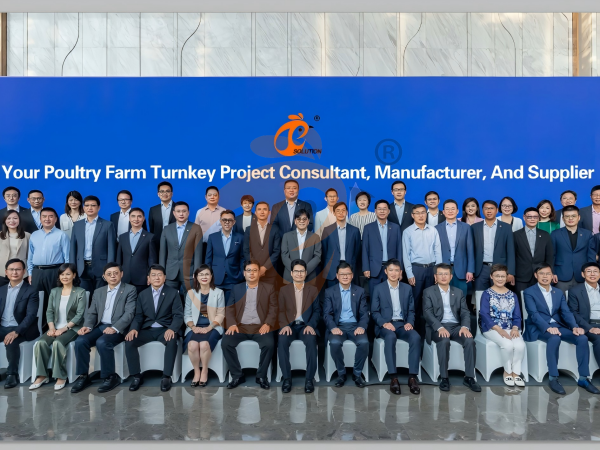
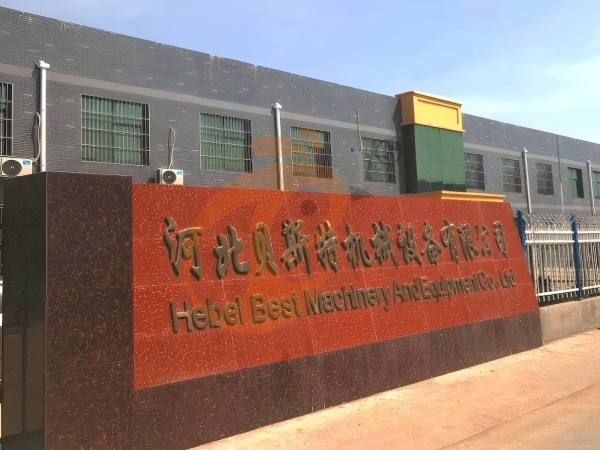
China Hebei Best Machinery And Equipment CO., LTD
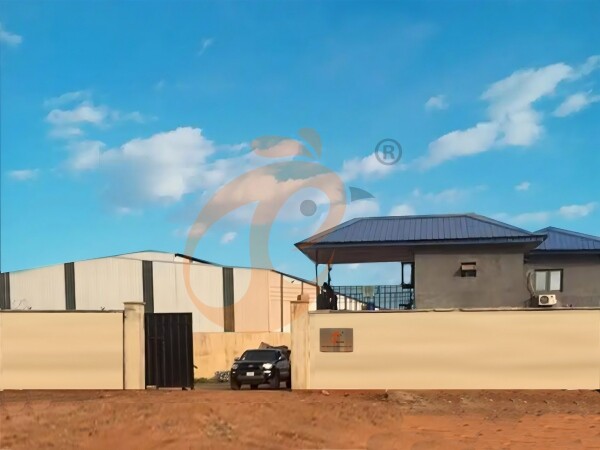
Nigeria Vanke Machinery And Equipment CO., LTD
Tanzania Best Machinery And Equipment CO., LTD
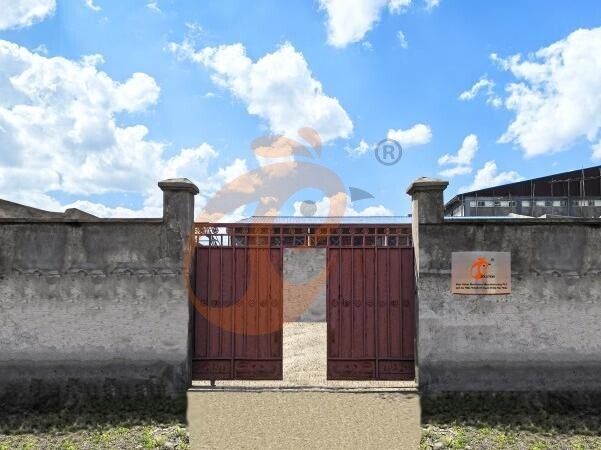
Ethiopia Best Hebei Machinery Manufacturing PLC




Reception /24 WhatsApp NO. : +8618830120193
MESSAGE
Products recommended
 HK Headquarter Offers EU-standard Poultry Farm Solutions, Manufacture Poultry Farm Equipment1. Continuous communication with the EU and the US
2. China, Nigeria, Ethiopia, Tanzania branch companies and factories
3. The products’ quality is customized for local poultry farms
4. Poultry cage and poultry farm equipment stock for sale
5. 24 online reception Whatsapp NO. : +8618830120193,contact us to get full informationRead More China Branch Offer Poultry Farm Business Plan, Manufacture Poultry Farm Equipment1. Address: Flat/RM 2416, 24/F, Runxing Building, Youyi Nan Street, Shijiazhuang City, Hebei Province, China
2. Poultry cage and poultry farm equipment factory and stock for sale
3. Customized for local poultry farms
4. Quality and design are based on Euro
5. 24 online reception Whatsapp NO. : +8618830120193Read More Nigeria Branch Offer Poultry Farm Business Plan, Manufacture Poultry Farm Equipment1. Address: After Sinoma Office, 200 Meters Near Danco Filling Station, Lagos/Ibadan Expressway, Lagos State, Nigeria
2. Poultry cage and poultry farm equipment factory and stock for sale
3. Customized for Nigerian poultry farms
4. Quality and design are based on Euro
5. 24 online reception Whatsapp NO. : +8618830120193Read More Ethiopia Branch Offer Poultry Farm Business Plan, Manufacture Poultry Farm Equipment1. Address: Gelan Gura, Akaki-kaliti Sub City, Addis Ababa, Ethiopia
2. Poultry cage and poultry farm equipment stock for sale
3. Customized for Ethiopian poultry farms
4. Quality and design are based on Euro
5. 24 online reception Whatsapp NO. : +8618830120193, contact us to get price listRead More Tanzania Branch Offer Poultry Farm Business Plan, Manufacture Poultry Farm Equipment1. Address: No.8, Sova Road, Msufini, Mlandizi, Kibaha, Pwani, Tanzania
2. Poultry cage and poultry farm equipment factory and stock for sale
3. Customized for Tanzanian poultry farms
4. Quality and design are based on Euro
5. 24 online reception Whatsapp NO. : +8618830120193Read More Automatic H Type Layer Battery Cage System1. 30,000-100,000+ layers/house chooses it
2. Structure type stacked 3-16 tiers range
3. Stocking density up to 17 birds/cage
4. Service life 25 years
5. Reception /WhatsApp NO. : +8618830120193Read More Automatic A Type Layer Battery Cage System1. 10,000-30,000+ layers/house chooses it
2. Lifespan 25+ years
3. Labor requirement 1 worker per 10,000 birds
4. Reduce disease rates by 15%-20%.
5. Reception /WhatsApp NO. : +8618830120193Read More Semi Automatic A Type Layer Battery Cage System1. 1,00-10,000+ layers/house chooses it
2. Egg breakage rate≤ 0.5%
3. Mesh spacing 2.5×2.5 cm
4. Egg collection floor slope 7–8°
5. Reception /WhatsApp NO. : +8618830120193Read More