H type chicken cages are increasingly applied in Nigerian poultry farms to support large-scale egg production systems.
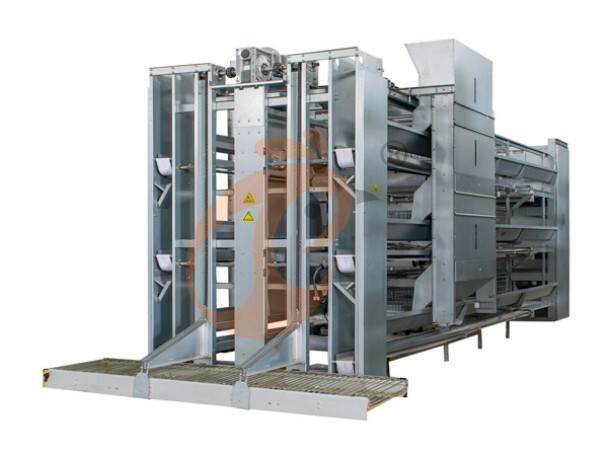
The structure integrates vertical cage stacking, automated feeding, and centralized egg collection within controlled poultry houses.
Commercial farms adopt this system to improve space utilization, labor allocation, and production planning accuracy.
The design aligns with modern poultry cage requirements for predictable output and scalable farm expansion.
Get professional poultry farm construction guidance, equipment selection solutions, and the latest price lists, whatsApp to +8618830120193, +2348111199996, or click to learn more:

Nigeria-China Branch Office And Factory Of Poultry Farm Equipment
Definition And Structural Logic Of H Type Chicken Cages
H type chicken cages are vertically stacked poultry cage systems designed for intensive layer production.
The structure is based on parallel upright columns and horizontal load beams forming a rigid steel framework.
This configuration allows multiple cage tiers to operate within the same footprint while maintaining mechanical stability.
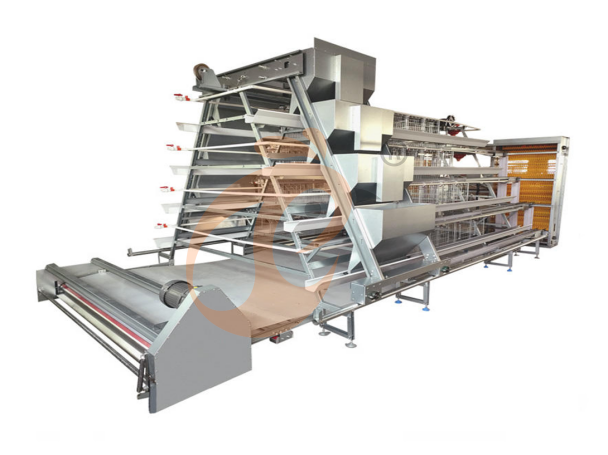
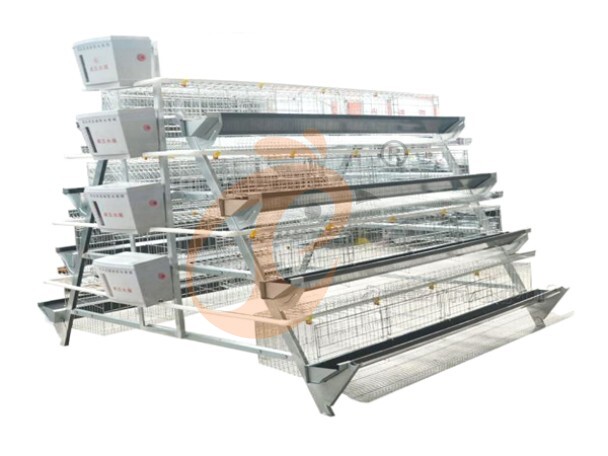
Compared with inclined cage layouts, H type systems support straight-line automation for feeding, egg collection, and manure removal.
Data is for reference only.Swipe horizontally to view full table.
Market Demand For H Type Chicken Cages In Nigerian Poultry Farms
The expansion of commercial poultry farms in Nigeria has increased demand for standardized housing systems capable of supporting large bird populations.
Poultry cage systems that reduce land use per bird are prioritized in peri-urban farming zones.
H type chicken cages align with these requirements by increasing stocking capacity per building while maintaining structured operational flow.
Common demand drivers include
Average flock sizes exceeding 15,000 layers per site.
Rising labor cost per production unit.
Higher egg handling efficiency requirements.
Feed cost sensitivity across production cycles.
Poultry House Requirements For H Type Cage Installation
H type chicken cages require poultry houses designed to support vertical loads, ventilation equipment, and automated lines.
Structural planning focuses on floor strength, column spacing, and airflow pathways.
Data is for reference only.Swipe horizontally to view full table.
Cage Unit Configuration And Bird Allocation
Each H type poultry cage system is assembled from standardized cage modules.
These modules allow consistent bird allocation, simplified inventory management, and predictable production planning.
Data is for reference only.Swipe horizontally to view full table.
Feeding System Operation In H Type Poultry Cage Systems
Feeding systems in H type chicken cages use motor-driven chain or pan lines connected to external silos.
Feed distribution is synchronized across tiers to maintain uniform intake levels.
Operational characteristics include:
Centralized feed storage.
Timed feeding cycles.
Equal feed flow across cage rows.
Reduced manual intervention.
Data is for reference only.Swipe horizontally to view full table.
Water Supply And Nipple Drinking Lines
Water delivery in H type poultry cage systems relies on closed nipple drinking lines.
Pressure regulators ensure stable water flow at each tier, supporting consistent bird hydration.
Data is for reference only.Swipe horizontally to view full table.
Egg Collection Process In H Type Chicken Cages
Egg collection uses belt systems positioned beneath cage floors.
Eggs roll forward onto belts and are transported to centralized collection points, reducing handling steps.
Data is for reference only.Swipe horizontally to view full table.
Manure Removal And Waste Control
Manure belts installed beneath each cage tier allow scheduled waste removal.
This system separates manure from birds and supports stable indoor air parameters.
Data is for reference only.Swipe horizontally to view full table.
Ventilation Compatibility In Nigerian Climate Conditions
H type chicken cages are compatible with natural ventilation, mechanical ventilation, and tunnel ventilation systems.
Airflow design supports temperature and humidity regulation across multiple cage tiers.
Data is for reference only.Swipe horizontally to view full table.
Automation Levels For Commercial Poultry Farms
H type poultry cage systems support different automation configurations based on farm investment planning and expansion stages.
Data is for reference only.Swipe horizontally to view full table.
Investment Structure And Cost Allocation
Capital investment for H type chicken cages is distributed across equipment, building, and installation components.
Data is for reference only.Swipe horizontally to view full table.
Production Output Planning
H type chicken cages support stable daily egg output aligned with commercial supply requirements.
Data is for reference only.Swipe horizontally to view full table.
Frequently Asked Questions
Q1: What are H type chicken cages used for in Nigerian poultry farms?
A1: They are used to house large layer flocks in vertically stacked poultry cage systems that support automated feeding, egg collection, and manure removal.
Q2: How do H type chicken cages improve farm operation efficiency?
A2: The system increases bird capacity per building, reduces manual labor per 10,000 birds, and standardizes production workflows.
Q3: Are H type poultry cages suitable for hot Nigerian climates?
A3: Yes, the system integrates with tunnel and mechanical ventilation designs that maintain controlled airflow and temperature ranges.
VANKE - One Of Nigeria Largest Poultry Equipment Manufacturer
VANKE operates global factory direct production supplying poultry farm equipment for commercial projects.
The company provides complete poultry cage and H type chicken cage systems with cage frame load capacity up to 350 Kg/M².
Turn-key engineering solutions cover design, manufacturing, installation, and commissioning.
Poultry cage systems support up to 10 vertical tiers with belt egg collection and manure removal.
Standard projects achieve labor requirements of 1–2 persons per 10,000 birds under full automation.
Contact Us To Received Your Customized Poultry Farm Plan
Headquarters And Branchs

Hong Kong Headquarter Management Team
Hong Kong Headquarter Taiyu Industrial Group CO., LTD
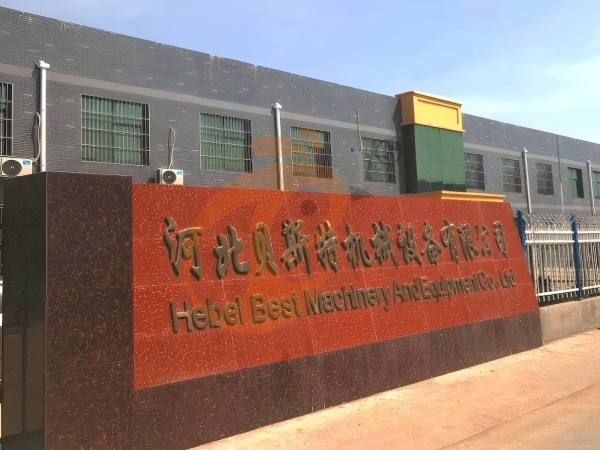
China Hebei Best Machinery And Equipment CO., LTD
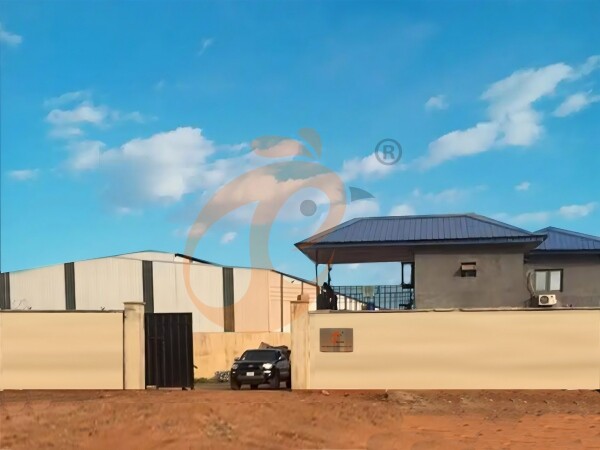
Nigeria Vanke Machinery And Equipment CO., LTD
Tanzania Best Machinery And Equipment CO., LTD
Ethiopia Best Hebei Machinery Manufacturing PLC




Reception /24 WhatsApp NO. : +8618830120193
MESSAGE
Products recommended
 HK Headquarter Offers EU-standard Poultry Farm Solutions, Manufacture Poultry Farm Equipment1. Continuous communication with the EU and the US
2. China, Nigeria, Ethiopia, Tanzania branch companies and factories
3. The products’ quality is customized for local poultry farms
4. Poultry cage and poultry farm equipment stock for sale
5. 24 online reception Whatsapp NO. : +8618830120193,contact us to get full informationRead More China Branch Offer Poultry Farm Business Plan, Manufacture Poultry Farm Equipment1. Address: Flat/RM 2416, 24/F, Runxing Building, Youyi Nan Street, Shijiazhuang City, Hebei Province, China
2. Poultry cage and poultry farm equipment factory and stock for sale
3. Customized for local poultry farms
4. Quality and design are based on Euro
5. 24 online reception Whatsapp NO. : +8618830120193Read More Nigeria Branch Offer Poultry Farm Business Plan, Manufacture Poultry Farm Equipment1. Address: After Sinoma Office, 200 Meters Near Danco Filling Station, Lagos/Ibadan Expressway, Lagos State, Nigeria
2. Poultry cage and poultry farm equipment factory and stock for sale
3. Customized for Nigerian poultry farms
4. Quality and design are based on Euro
5. 24 online reception Whatsapp NO. : +8618830120193Read More Ethiopia Branch Offer Poultry Farm Business Plan, Manufacture Poultry Farm Equipment1. Address: Gelan Gura, Akaki-kaliti Sub City, Addis Ababa, Ethiopia
2. Poultry cage and poultry farm equipment stock for sale
3. Customized for Ethiopian poultry farms
4. Quality and design are based on Euro
5. 24 online reception Whatsapp NO. : +8618830120193, contact us to get price listRead More Tanzania Branch Offer Poultry Farm Business Plan, Manufacture Poultry Farm Equipment1. Address: No.8, Sova Road, Msufini, Mlandizi, Kibaha, Pwani, Tanzania
2. Poultry cage and poultry farm equipment factory and stock for sale
3. Customized for Tanzanian poultry farms
4. Quality and design are based on Euro
5. 24 online reception Whatsapp NO. : +8618830120193Read More Automatic H Type Layer Battery Cage System1. 30,000-100,000+ layers/house chooses it
2. Structure type stacked 3-16 tiers range
3. Stocking density up to 17 birds/cage
4. Service life 25 years
5. Reception /WhatsApp NO. : +8618830120193Read More Automatic A Type Layer Battery Cage System1. 10,000-30,000+ layers/house chooses it
2. Lifespan 25+ years
3. Labor requirement 1 worker per 10,000 birds
4. Reduce disease rates by 15%-20%.
5. Reception /WhatsApp NO. : +8618830120193Read More Semi Automatic A Type Layer Battery Cage System1. 1,00-10,000+ layers/house chooses it
2. Egg breakage rate≤ 0.5%
3. Mesh spacing 2.5×2.5 cm
4. Egg collection floor slope 7–8°
5. Reception /WhatsApp NO. : +8618830120193Read More