- Poultry equipment training combines operation, safety, maintenance, troubleshooting, and measurable staff competency across modern poultry houses.
Automatic poultry equipment can reduce repetitive labor while helping operators maintain consistent production procedures through integrated control systems.
Poultry farming equipment training should connect practical operation with technical readings such as 0.75–2 kW motor power and system-specific operating limits.
Structured training supports feeding, drinking, ventilation, cooling, environmental control, manure handling, lighting, and automation throughout commercial poultry production.
- Supplier training, commissioning guidance, spare parts, and technical support complete a practical poultry equipment investment from installation through long-term operation.
Get professional poultry farm construction guidance, equipment selection solutions, and the latest price lists, whatsApp to +8618830120193, click to learn more:
Start With A Skills-Based Training Checklist
Effective poultry equipment training should begin with a measurable skills checklist rather than a general introduction.
Staff need to understand how each system operates, where operating limits are located, and which readings require immediate attention.
For example, automatic poultry equipment may use a 0.75–2 kW drive motor, while commercial feed hoppers can be configured around 600–1,200 kg, giving trainers concrete technical points to explain during hands-on instruction.
Data is for reference only.Swipe horizontally to view full table.
A professional poultry equipment supplier can make this process easier by providing user-friendly machinery, clear operating instructions, and technical guidance.
Equipment designed for straightforward operation reduces the learning curve when new workers join the farm.
Teach One Machine At A Time
Training Formula
Observe → Practice → Repeat → Evaluate
Instead of asking new employees to learn an entire poultry house in one day, divide training into equipment modules.
For example, begin with the feeding system.
Show employees how feed moves through the system, how to check components, and how to identify abnormal operation.
Once they can complete the procedure independently, move to drinking systems, environmental controls, ventilation equipment, manure handling, or other poultry farming equipment.
A commercial feeding system can use a 33–38 cm feeder pan diameter and 0.75–1.5 kW motor range, giving operators concrete technical references during training.
This modular approach has an important commercial advantage: easy-to-train poultry equipment can reduce labor pressure and improve operational consistency.
When selecting poultry equipment, farms should therefore evaluate not only capacity and price, but also:
- Ease of operation
- Control-system simplicity
- Accessibility for maintenance
- Availability of spare parts
- Supplier training and after-sales support
A complete equipment supplier should support customers beyond installation, helping farm managers establish practical training procedures for their teams.
Use A ''Watch–Do–Check'' Training Table
Data is for reference only.Swipe horizontally to view full table.
The ''Watch–Do–Check'' method works particularly well for automated poultry equipment because many systems depend on coordinated components rather than one isolated machine.
Feed lines, drinking lines, ventilation fans, and environmental controllers must each be understood before employees can manage the complete production environment.
For example, a climate controller may receive information from temperature and humidity sensors and trigger ventilation equipment according to programmed conditions.
Training employees to read actual sensor information is therefore more useful than teaching them only which buttons to press.
From an equipment-sales perspective, integrated poultry farming equipment creates additional value.
When equipment is engineered as an integrated system, suppliers can train operators around one coordinated workflow rather than multiple disconnected machines.
Build Daily Inspection Habits
The 10-Minute Routine
Before Operation
Check equipment surfaces, connections, guards, cables, pipes, and accessible moving components.
Functional Inspection
Confirm that feeding, watering, ventilation, and environmental-control equipment responds correctly.
Measurement
Record relevant readings rather than relying on visual judgment.
For example, poultry equipment ventilation systems may use 20,000–50,000 m³/h fan airflow, while cooling pads can be specified at 100–150 mm thickness.
Record
Enter abnormal readings, leaks, unusual sounds, or equipment alarms into the farm maintenance log.
Escalate
Operators should know exactly when a problem must be transferred to the maintenance team or equipment supplier.
Daily inspection is particularly important for drinking systems.
Automatic poultry equipment requires regular checks because a malfunction can affect flock conditions continuously.
Industry guidance also recommends testing drinking systems across multiple locations rather than assuming one functioning point represents the entire system.
Compare Training Requirements Before Buying Equipment
Data is for reference only.Swipe horizontally to view full table.
Training requirements should be included in the poultry equipment purchasing process, not considered after installation.
A farm buying automated poultry equipment should ask the supplier how operators will be trained, what technical documents are supplied, and how
troubleshooting support is provided.
Equipment selection also affects long-term labor organization.
An automated system can standardize repetitive processes, but employees still need to understand operating parameters and alarms.
The better approach is to combine automation with structured training rather than treating automation as a substitute for skilled management.
Turn Mistakes Into Practical Training Scenarios
Scenario-Based Training
Imagine that a feeding line stops during scheduled operation.
The employee should not immediately reset the poultry equipment.
Instead
1. Stop Safely
Confirm that the equipment can be inspected safely.
2. Identify The Symptom
Determine whether there is a blockage, abnormal noise, power issue, or control-system warning.
3. Follow The Troubleshooting Procedure
Check the most likely causes in the correct order.
4. Escalate When Necessary
Employees should know which problems require a technician.
5. Record The Event
Document the problem and solution for future reference.
The trainer can create controlled scenarios involving a 1.1–2.2 kW ventilation motor, a blocked feed point, or an abnormal environmental reading.
Such exercises teach workers to connect a visible symptom with technical parameters instead of relying on guesswork.
The same principle applies to ventilation.
Employees should understand that fan operation is connected to air movement, house conditions, and inlet configuration.
Proper ventilation is essential for managing gases such as ammonia, and cited industry guidance identifies 25 ppm as a maximum ammonia exposure level.
A professional poultry equipment supplier can strengthen training by providing fault codes, wiring diagrams, spare-parts information, commissioning records, and technical assistance.
Establish Clear Responsibility By Equipment
Data is for reference only.Swipe horizontally to view full table.
Clear responsibility prevents equipment checks from being overlooked.
Each employee should know which poultry farming equipment they operate, which readings they are expected to record, and which faults must be escalated.
For example, a manure-removal operator should understand belt tracking and drive behavior rather than simply pressing the start button.
Commercial manure systems may use 1.0–1.2 mm polypropylene belts and belt lengths of up to 220 m, so training should reflect the actual equipment
configuration installed on the farm.
This responsibility-based model is also useful when purchasing complete poultry equipment packages.
Suppliers can prepare training documents according to the actual equipment layout, making staff onboarding more relevant to the farm's production system.
Train For Safety Before Speed
Safety First Principle
Do not reward employees simply for operating poultry equipment quickly.
Reward them for operating it correctly and safely.
Training should cover emergency stops, electrical safety, moving components, cleaning procedures, lockout practices where applicable, and safe access to machinery.
A poultry house may use 220/380 V electrical supply and 50/60 Hz frequency, depending on project specifications and local electrical standards.
Staff responsible for equipment operation should understand the site's electrical configuration and know which tasks require authorized maintenance personnel.
Ventilation systems also require contingency planning.
Poultry-industry guidance recommends standby generators and alarm systems for mechanically ventilated houses so essential functions such as ventilation, watering, feeding, and lighting can continue during power interruptions.
When poultry equipment is selected from a supplier offering complete engineering support, safety considerations can be incorporated during layout, installation, commissioning, and operator training.
Measure Training Results With Simple KPIs
Data is for reference only.Swipe horizontally to view full table.
Training performance should be measurable.
Managers can compare operating records before and after training to determine whether employees are following procedures correctly.
Feed uniformity is one useful example.
Some commercial poultry equipment systems specify feed uniformity of at least 95%, making it possible to connect operator performance with an objective
equipment-related production measurement.
Likewise, environmental-control training can be evaluated through actual sensor records rather than verbal assessments.
This approach helps farm owners identify whether a problem originates from operator behavior, equipment configuration, maintenance, or system design.
Create A 30-Day New-Employee Plan
Days 1–3: Understand
Introduce the poultry house layout, equipment sequence, safety procedures, and control architecture.
Employees should learn how feeding, drinking, ventilation, environmental control, and manure systems interact.
Days 4–10: Practice
Let employees operate individual systems under supervision.
During ventilation training, workers can learn how airflow changes with fan configuration and how tunnel systems may reach 0.3–2.5 m/s air velocity under different operating conditions.
Days 11–20: Perform
Assign routine responsibilities and require employees to complete daily inspections independently.
Days 21–30: Evaluate
Test normal operation, basic troubleshooting, cleaning, inspection, and emergency procedures.
At the end of 30 days, managers should know exactly which tasks the employee can perform independently and which require additional supervision.
For farms expanding from one house to several houses, this poultry farming equipment training framework can also standardize employee onboarding across multiple locations.
Make Supplier Support Part Of The Training System
Data is for reference only.Swipe horizontally to view full table.
Supplier support should be treated as part of the poultry equipment investment rather than an optional extra.
A complete poultry equipment supplier should be able to connect equipment design with installation, commissioning, operator training, maintenance, spare parts, and technical support.
This becomes especially important for integrated projects.
A modern poultry house may combine feeding, drinking, ventilation, cooling, lighting, and environmental-control equipment into one operating system.
Professional project design therefore needs to consider equipment interaction from the beginning.
For customers comparing suppliers, questions about training materials, commissioning procedures, spare-parts availability, and technical response should be included alongside questions about equipment specifications and price.
The 5-Step Training Framework
Data is for reference only.Swipe horizontally to view full table.
Training poultry equipment staff effectively requires more than showing employees how to switch equipment on and off.
A professional training program connects operation, measurement, inspection, troubleshooting, and maintenance.
Frequently Asked Questions
Q1: How long does poultry equipment staff training usually take?
A structured program can use a 30-day onboarding cycle, with initial equipment operation followed by supervised practice, troubleshooting, and competency assessment.
Q2: What should employees learn before operating automatic poultry equipment?
Employees should understand operating sequences, safety procedures, alarms, inspection points, and basic troubleshooting before independent operation.
Q3: Why does equipment design affect staff training?
User-oriented poultry equipment can simplify operator procedures, while integrated controls can reduce repetitive manual actions and help standardize daily
workflows.
Taiyu (HK) Group - One Of China Largest Poultry Equipment Manufacturer
Poultry equipment covers integrated feeding, drinking, ventilation, cooling, environmental control, manure handling, lighting, and automation systems, with project configurations supporting 20,000–50,000 m³/h ventilation airflow according to selected equipment specifications.
Global factory direct sales provide poultry equipment with engineering design, manufacturing coordination, commissioning documentation, technical parameters, and international project support for commercial poultry operations.
Poultry equipment projects can be developed as Turn-key engineering solutions, integrating house layout, automatic feeding, environmental control, ventilation, cooling, electrical coordination, installation, and operator training.
Poultry farming equipment can be configured according to flock capacity, house dimensions, climate conditions, automation requirements, electrical standards, and customer production targets.
Taiyu (HK) group supports international poultry projects through factory manufacturing, equipment integration, spare-parts coordination, technical documentation, commissioning assistance, and after-sales engineering service.
Contact Us To Received Your Customized Poultry Farm Plan
Headquarters And Branchs
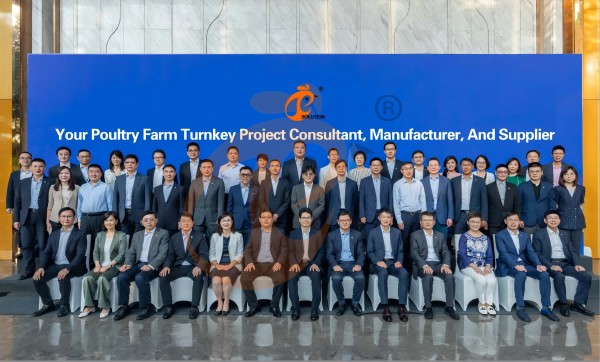
Hong Kong Headquarter Management Team
Hong Kong Headquarter Taiyu Industrial Group CO., LTD
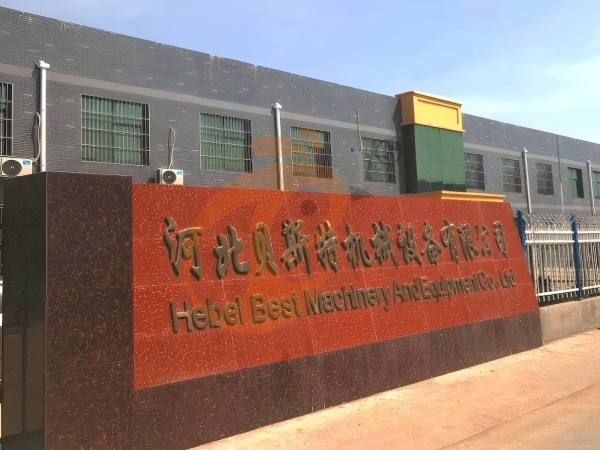
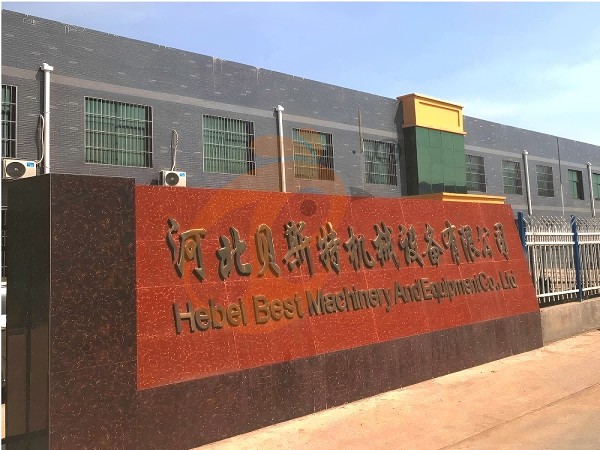
China Hebei Best Machinery And Equipment CO., LTD
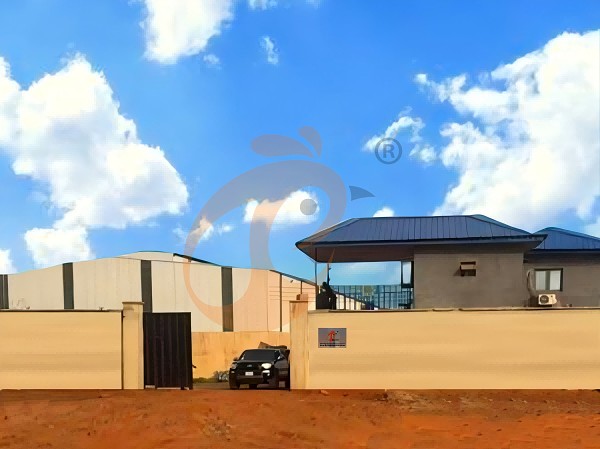
Nigeria Vanke Machinery And Equipment CO., LTD
Tanzania Best Machinery And Equipment CO., LTD
Ethiopia Best Hebei Machinery Manufacturing PLC
Reception /24 WhatsApp NO. : +8618830120193
MESSAGE
Products recommended
 HK Headquarter Offers EU-standard Poultry Farm Solutions, Manufacture Poultry Farm Equipment1. Continuous communication with the EU and the US
2. China, Nigeria, Ethiopia, Tanzania branch companies and factories
3. The products’ quality is customized for local poultry farms
4. Poultry cage and poultry farm equipment stock for sale
5. 24 online reception Whatsapp NO. : +8618830120193,contact us to get full informationRead More China Branch Offer Poultry Farm Business Plan, Manufacture Poultry Farm Equipment1. Address: Flat/RM 2416, 24/F, Runxing Building, Youyi Nan Street, Shijiazhuang City, Hebei Province, China
2. Poultry cage and poultry farm equipment factory and stock for sale
3. Customized for local poultry farms
4. Quality and design are based on Euro
5. 24 online reception Whatsapp NO. : +8618830120193Read More Nigeria Branch Offer Poultry Farm Business Plan, Manufacture Poultry Farm Equipment1. Address: After Sinoma Office, 200 Meters Near Danco Filling Station, Lagos/Ibadan Expressway, Lagos State, Nigeria
2. Poultry cage and poultry farm equipment factory and stock for sale
3. Customized for Nigerian poultry farms
4. Quality and design are based on Euro
5. 24 online reception Whatsapp NO. : +8618830120193Read More Ethiopia Branch Offer Poultry Farm Business Plan, Manufacture Poultry Farm Equipment1. Address: Gelan Gura, Akaki-kaliti Sub City, Addis Ababa, Ethiopia
2. Poultry cage and poultry farm equipment stock for sale
3. Customized for Ethiopian poultry farms
4. Quality and design are based on Euro
5. 24 online reception Whatsapp NO. : +8618830120193, contact us to get price listRead More Tanzania Branch Offer Poultry Farm Business Plan, Manufacture Poultry Farm Equipment1. Address: No.8, Sova Road, Msufini, Mlandizi, Kibaha, Pwani, Tanzania
2. Poultry cage and poultry farm equipment factory and stock for sale
3. Customized for Tanzanian poultry farms
4. Quality and design are based on Euro
5. 24 online reception Whatsapp NO. : +8618830120193Read More Automatic H Type Layer Battery Cage System1. 30,000-100,000+ layers/house chooses it
2. Structure type stacked 3-16 tiers range
3. Stocking density up to 17 birds/cage
4. Service life 25 years
5. Reception /WhatsApp NO. : +8618830120193Read More Automatic A Type Layer Battery Cage System1. 10,000-30,000+ layers/house chooses it
2. Lifespan 25+ years
3. Labor requirement 1 worker per 10,000 birds
4. Reduce disease rates by 15%-20%.
5. Reception /WhatsApp NO. : +8618830120193Read More Semi Automatic A Type Layer Battery Cage System1. 1,00-10,000+ layers/house chooses it
2. Egg breakage rate≤ 0.5%
3. Mesh spacing 2.5×2.5 cm
4. Egg collection floor slope 7–8°
5. Reception /WhatsApp NO. : +8618830120193Read More