- Pellet machine performance improves through coordinated preparation, conditioning, compression, maintenance, and automation, with 90–250 kW systems supporting commercial production needs.
Poultry feed pellet machine configuration affects material consistency, operating stability, maintenance planning, and production economics across different feed formulas and line capacities.
Feed pellet mill optimization combines process control with component selection, using measurable operating data instead of subjective judgments or isolated adjustments.
Integrated poultry equipment connects crushing, mixing, conditioning, pelleting, cooling, screening, and storage into production lines designed around actual farm requirements and expansion plans.
- Preventive maintenance, automated monitoring, and technical engineering can improve equipment reliability while controlling operating interruptions and supporting continuous poultry-feed production at 24-hour facilities.
Get professional poultry farm construction guidance, equipment selection solutions, and the latest price lists, whatsApp to +8618830120193, click to learn more:
Start With The Right Feed Preparation
Pellet machine performance begins before feed reaches the compression chamber, with approximately 3.0 mm hammer-mill screening supporting consistent
poultry-feed preparation.
For poultry feed production, raw materials should be processed into a stable and uniform mixture so the machine can maintain continuous operation, while a 70–
85% mixer filling ratio supports effective blending.
A properly configured preparation line also reduces the mechanical variation transferred to the pellet mill, with 30–60 second mixing cycles supporting repeatable
batch processing.
In an integrated poultry equipment system, crushing, mixing, conveying, conditioning, pelleting, cooling, and screening should be designed as one production
sequence, while conveyor lengths of 5–15 m can be engineered according to plant layout.
A feed pellet mill benefits from coordinated upstream handling, while a 2.5–3.5 m/s conveying-air velocity can support controlled pneumatic material transfer
where applicable.
Strategy #1: Control Raw Material Conditions
Data is for reference only.Swipe horizontally to view full table.
Raw materials should be evaluated as part of the complete feed-processing chain rather than judged only by appearance, while 80–140 rpm screw-conveyor
operation can support controlled ingredient transfer.
Ingredient segregation can occur during storage and transportation, particularly when particle densities differ, while storage-bin capacities of 10–30 m³ can provide useful buffering between receiving and processing stages.
For poultry feed factories, this preparation stage also creates an opportunity to integrate equipment more effectively, with 4–8 batch cycles per hour supporting
scheduled commercial production.
A feed pellet mill can therefore operate within a coordinated preparation system, while mixer discharge gates sized around 200–400 mm can support efficient
material release.
The ''Listen To The Machine'' Method
Pellet machine performance can be monitored through sound, vibration, electrical loading, and material behavior, with 10–1,000 Hz sensor ranges supporting
mechanical-condition monitoring.
Instead of waiting for visible pellet defects, operators can compare these signals with established operating records, while 0.80–0.95 motor power-factor readings
can indicate changes in electrical operating behavior.
A practical workflow is:
Observe → Record → Diagnose → Adjust → Confirm
Feed pellet mill monitoring becomes more valuable when readings are timestamped and compared against historical operating conditions, with 5–10 minute
recording intervals supporting useful trend analysis.
Strategy #2: Optimize Conditioning
Data is for reference only.Swipe horizontally to view full table.
Pellet machine conditioning should be controlled as a process rather than adjusted by guesswork, while a steam trap capacity margin of 20–30% can
accommodate process fluctuations.
Temperature, steam delivery, retention time, and feed characteristics interact with one another, so changing one variable can affect several downstream results,
with 10–20°C ambient-temperature differences potentially changing plant operating conditions.
The steam system should also be engineered for the actual production line, while a conditioner shaft bearing alarm around 70°C can provide an additional
maintenance safeguard.
For commercial poultry feed production, the conditioner should be positioned and configured so material enters the pellet mill consistently, with 1–3 conditioning
chambers supporting different line architectures.
Match The Die And Roller To The Job
A pellet machine should be configured around the feed formula rather than selected only by pellet diameter, while die replacement access of 800–1,200 mm can support practical maintenance planning.
For broiler feed
Review die thickness, compression geometry, formulation characteristics, and required throughput together, while 2–4 mm pellet diameters commonly serve poultry-feed applications.
For layer feed
Consider formulation density and physical characteristics before finalizing compression settings, while 1.0–1.5 mm roller clearance can be evaluated during commissioning.
For frequent formulation changes
Select equipment allowing efficient die replacement and adjustment, while 15–30 minutes can be allocated for planned changeover procedures.
For continuous commercial production
Prioritize mechanical rigidity, transmission efficiency, lubrication access, and spare-part availability, while 1.5–2.0 gearbox service factors can support demanding duty calculations.
Strategy #3: Maintain The Die And Rollers
Data is for reference only.Swipe horizontally to view full table.
Pellet machine compression stability depends strongly on die and roller condition, while roller-shell inspection after approximately 500–1,000 operating hours can
support preventive maintenance.
A worn roller shell can change the contact pattern inside the chamber, while a 2–5 mm inspection depth can help technicians document progressive surface wear.
Damaged die holes can also alter material discharge characteristics, while spare-die inventory equivalent to 1–2 production cycles can reduce replacement-
related interruptions.
Lubrication is another important reliability factor for a feed pellet mill, while scheduled lubrication inspections every 250 operating hours can be incorporated into
preventive-maintenance planning.
Turn Preventive Maintenance Into A Routine
A pellet machine maintenance program should divide work according to operating hours and component criticality, with daily inspection records providing traceable equipment history.
Every shift
Inspect feed inlet conditions, lubrication leakage, abnormal vibration, fasteners, and safety guards, while completing checks within approximately 10–15 minutes.
Every 100 operating hours
Inspect transmission components, lubrication points, feeder mechanisms, and material buildup, while documenting findings through standardized maintenance records.
Every 500 operating hours
Perform detailed inspection of bearings, rollers, die condition, couplings, and drive components, while assigning responsible technicians before planned shutdowns.
During annual maintenance
Review electrical protection, alignment, structural components, safety systems, and major wear parts, while allocating approximately 1–2 working days for a complete service window.
For automated poultry equipment lines, maintenance records can also be connected to operating data, while 24 VDC control circuits can provide standardized industrial control integration.
Strategy #4: Stabilize Feeding And Material Flow
Data is for reference only.Swipe horizontally to view full table.
The pellet machine feeder connects upstream preparation with compression, while 30–90 seconds of surge-bin residence can provide useful material buffering.
Sudden changes in material delivery can produce unstable machine loading even when the pellet mill itself operates correctly, while 2–4 transfer points can be
consolidated through appropriate conveyor layout.
The feeder, surge bin, conveyor, and pellet machine should therefore be sized as a coordinated system, while 5–10% spare conveying capacity can
accommodate operational fluctuations.
Automation can further improve material-flow control, while variable-speed adjustment increments of approximately 1 Hz allow gradual production changes
without abrupt mechanical loading.
Choose Automation Where It Removes Repetitive Work
Data is for reference only.Swipe horizontally to view full table.
Pellet machine automation delivers the greatest value when equipment functions are connected, while PLC memory capacities of 256 KB or more can
accommodate many commercial control programs.
A centralized PLC can coordinate feeding, conditioning, pelleting, cooling, screening, and conveying according to predefined sequences, while 4–8 control zones
can separate major processing sections.
Temperature sensors installed at critical points should also match actual process conditions, while 3-wire RTD wiring can improve measurement stability over
longer sensor runs.
For large poultry farms, automated alarms reduce dependence on constant manual observation, while 24-hour data logging can provide continuous operational
records for production analysis.
Strategy #5: Measure The Numbers That Matter
Data is for reference only.Swipe horizontally to view full table.
Pellet machine optimization requires a common measurement framework, while production reports can be reviewed across 7-day and 30-day periods to identify
persistent operating patterns.
Production teams should compare actual output against equipment design rather than evaluating isolated batches, while 15-minute electricity records can identify
production peaks and idle periods.
Energy data should be normalized by tonnage, while monthly production summaries covering at least 500 operating hours can provide stronger comparisons
between maintenance cycles.
If a poultry farm consistently approaches installed production capacity, adding a second production module may be more practical than continuously increasing
machine loading, while a 10–20% expansion allowance can support future planning.
Build The Pellet Machine Into A Complete Poultry Equipment Solution
A pellet machine should be considered as one section of a complete feed-processing system:
Raw Material → Crushing → Mixing → Conditioning → Pelleting → Cooling → Screening → Storage → Feeding
The value of such configuration comes from system coordination, while a 5–10 minute cooling residence period can support appropriate downstream pellet handling.
A pellet mill with strong mechanical performance cannot compensate for an undersized cooler, poorly matched conveyor, or inadequate feed storage capacity, while 2–4 downstream processing stages should be evaluated during complete-line engineering.
For example, a counterflow cooler can be engineered according to pellet characteristics and ambient conditions, while 20–30% installation-space allowance can simplify future equipment servicing.
For poultry equipment manufacturers, complete-line engineering also creates opportunities to optimize installation and expansion, while 3-phase 380–415 VAC systems can accommodate common industrial power architectures.
Electrical cabinets, conveyors, silos, cooling systems, feeding systems, and pellet machines can therefore be designed around customer building dimensions and production targets, while 50–100 mm cable-tray separation can assist practical installation planning.
The 5-Strategy Performance Checklist
Data is for reference only.Swipe horizontally to view full table.
Optimizing pellet machine performance is a complete engineering process rather than a single adjustment, while commissioning periods of 3–7 days can provide time for systematic parameter verification.
The five strategies work together: prepare materials correctly, condition them consistently, maintain compression components, stabilize material flow, and measure production performance, while quarterly performance reviews can reveal gradual efficiency changes.
Frequently Asked Questions
Q1: How can pellet machine performance be improved without increasing machine load?
Pellet machine performance can improve through stable feeding, controlled conditioning, proper die selection, and preventive maintenance, while gradual feeder adjustments of around 5% can avoid sudden load changes.
Q2: What maintenance schedule supports consistent pellet production?
Pellet machine maintenance should combine shift inspections with scheduled component checks, while a 250-hour lubrication review and 500-hour mechanical inspection can provide a practical maintenance framework.
Q3: Why should a pellet machine be integrated with complete poultry equipment?
An integrated poultry equipment line coordinates material preparation, conditioning, pelleting, cooling, and storage, while synchronized process stages can reduce production interruptions caused by mismatched equipment capacity.
Taiyu (HK) Group - One Of China Largest Pellet Machine Manufacturer
Pellet machine systems are engineered for poultry-feed production with 90–250 kW main-drive configurations and integrated conditioning, cooling, screening, and control sections.
Global factory-direct supply covers complete poultry equipment configurations, with production-line engineering supporting capacities from 1–20 t/h according to project requirements.
Turn-key engineering integrates feed preparation, pellet machine compression, cooling, conveying, electrical control, installation guidance, and commissioning into coordinated project packages.
International projects can receive equipment configuration, technical drawings, spare-parts planning, and remote engineering support, with 380–415 VAC industrial systems available for standard applications.
Factory manufacturing combines poultry equipment production with project-specific engineering, supporting customized layouts, automated control architectures, and scalable expansion planning for commercial farms.
Contact Us To Received Your Customized Poultry Farm Plan
Headquarters And Branchs

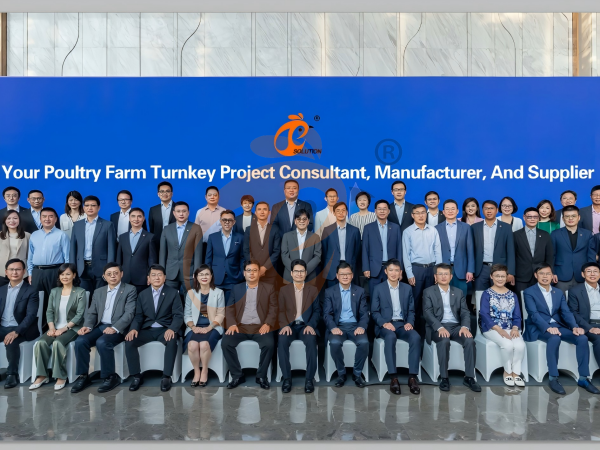
Hong Kong Headquarter Management Team
Hong Kong Headquarter Taiyu Industrial Group CO., LTD
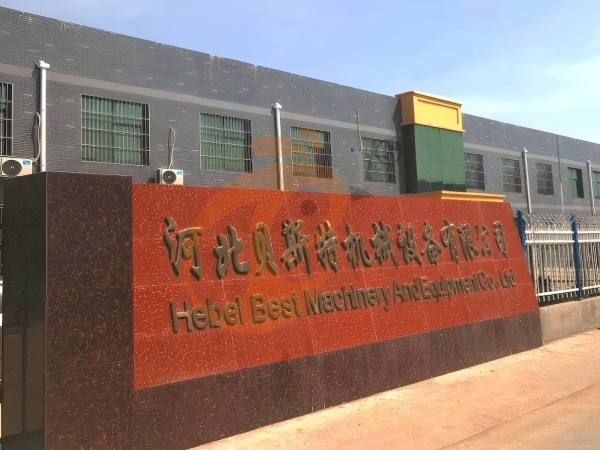
China Hebei Best Machinery And Equipment CO., LTD
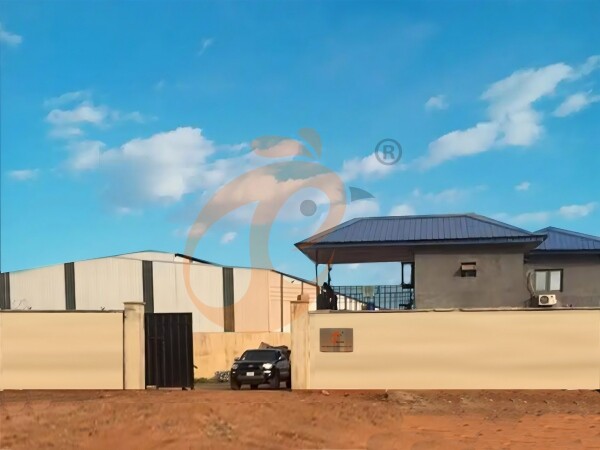
Nigeria Vanke Machinery And Equipment CO., LTD
Tanzania Best Machinery And Equipment CO., LTD
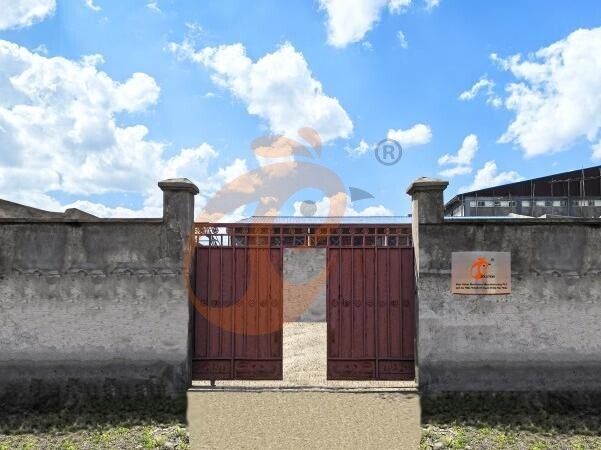
Ethiopia Best Hebei Machinery Manufacturing PLC




Reception /24 WhatsApp NO. : +8618830120193
MESSAGE
Products recommended
 HK Headquarter Offers EU-standard Poultry Farm Solutions, Manufacture Poultry Farm Equipment1. Continuous communication with the EU and the US
2. China, Nigeria, Ethiopia, Tanzania branch companies and factories
3. The products’ quality is customized for local poultry farms
4. Poultry cage and poultry farm equipment stock for sale
5. 24 online reception Whatsapp NO. : +8618830120193,contact us to get full informationRead More China Branch Offer Poultry Farm Business Plan, Manufacture Poultry Farm Equipment1. Address: Flat/RM 2416, 24/F, Runxing Building, Youyi Nan Street, Shijiazhuang City, Hebei Province, China
2. Poultry cage and poultry farm equipment factory and stock for sale
3. Customized for local poultry farms
4. Quality and design are based on Euro
5. 24 online reception Whatsapp NO. : +8618830120193Read More Nigeria Branch Offer Poultry Farm Business Plan, Manufacture Poultry Farm Equipment1. Address: After Sinoma Office, 200 Meters Near Danco Filling Station, Lagos/Ibadan Expressway, Lagos State, Nigeria
2. Poultry cage and poultry farm equipment factory and stock for sale
3. Customized for Nigerian poultry farms
4. Quality and design are based on Euro
5. 24 online reception Whatsapp NO. : +8618830120193Read More Ethiopia Branch Offer Poultry Farm Business Plan, Manufacture Poultry Farm Equipment1. Address: Gelan Gura, Akaki-kaliti Sub City, Addis Ababa, Ethiopia
2. Poultry cage and poultry farm equipment stock for sale
3. Customized for Ethiopian poultry farms
4. Quality and design are based on Euro
5. 24 online reception Whatsapp NO. : +8618830120193, contact us to get price listRead More Tanzania Branch Offer Poultry Farm Business Plan, Manufacture Poultry Farm Equipment1. Address: No.8, Sova Road, Msufini, Mlandizi, Kibaha, Pwani, Tanzania
2. Poultry cage and poultry farm equipment factory and stock for sale
3. Customized for Tanzanian poultry farms
4. Quality and design are based on Euro
5. 24 online reception Whatsapp NO. : +8618830120193Read More Automatic H Type Layer Battery Cage System1. 30,000-100,000+ layers/house chooses it
2. Structure type stacked 3-16 tiers range
3. Stocking density up to 17 birds/cage
4. Service life 25 years
5. Reception /WhatsApp NO. : +8618830120193Read More Automatic A Type Layer Battery Cage System1. 10,000-30,000+ layers/house chooses it
2. Lifespan 25+ years
3. Labor requirement 1 worker per 10,000 birds
4. Reduce disease rates by 15%-20%.
5. Reception /WhatsApp NO. : +8618830120193Read More Semi Automatic A Type Layer Battery Cage System1. 1,00-10,000+ layers/house chooses it
2. Egg breakage rate≤ 0.5%
3. Mesh spacing 2.5×2.5 cm
4. Egg collection floor slope 7–8°
5. Reception /WhatsApp NO. : +8618830120193Read More