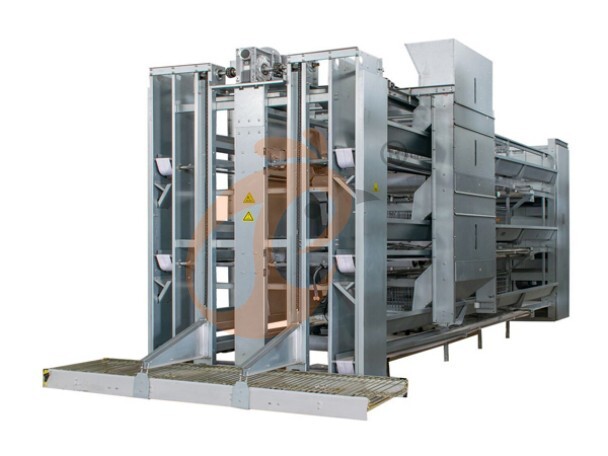
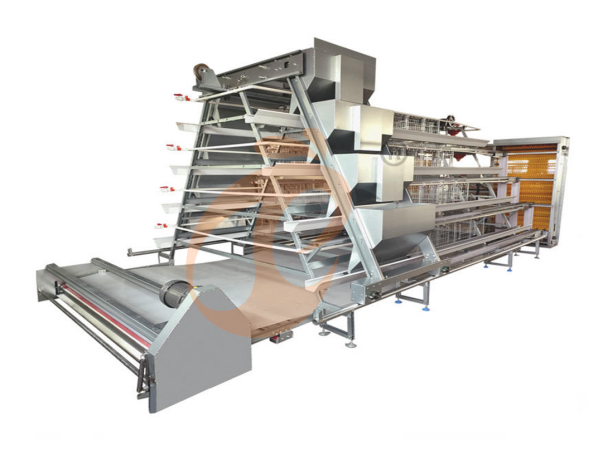
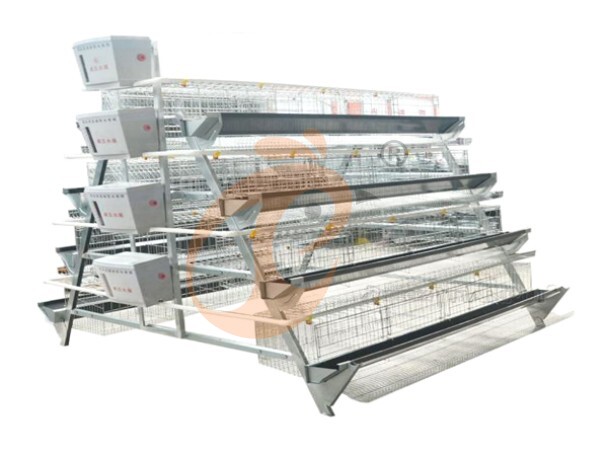
A type poultry cage system plays a critical role in modern Ethiopian poultry farming under diverse climates
Ethiopia combines highland, lowland, arid, and tropical poultry production environments
Climate adaptation directly impacts laying rate, mortality control, and operational stability
Commercial cage systems must balance productivity, animal welfare, and long-term durability
Local feed cost structures and labor availability influence equipment configuration decisions
Get professional poultry farm construction guidance, equipment selection solutions, and the latest price lists, whatsApp to +8618830120193, click to learn more:

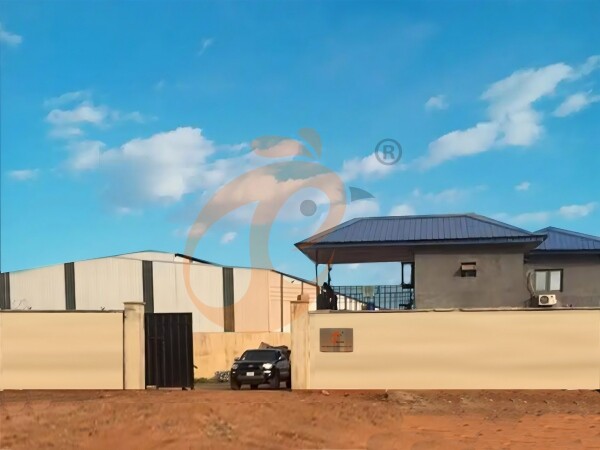
Ethiopia Branch Office And Factory Of Poultry Farm Equipment
Understanding Ethiopia's Poultry Climate Landscape
Ethiopia presents one of the most diverse poultry production climates in Africa.
Altitude variations exceed 2,000 m between regions.
Temperature fluctuations may reach 15 °C within a single day.
These climate factors require cage systems that are not generic imports.
They demand localized engineering adaptation.
Data is for reference only. Swipe horizontally to view full table.
Why A Type Poultry Cage System Fits Ethiopia And Similar Regions
The A type poultry cage system is structurally efficient for land-constrained farms.
It enables vertical stocking density without compromising accessibility.
Egg collection uniformity improves consistency across flocks.
This structure aligns well with Ethiopia’s expanding commercial poultry sector.
Especially for farms scaling from 5,000 to 50,000 birds.
Climate-Based Tip One: Heat Management Through Airflow Engineering
Heat stress remains the primary production risk in Ethiopian lowland regions.
Bird performance declines sharply above 30 °C.
Effective airflow must be continuous, directional, and adjustable.
Static ventilation designs are insufficient.
Data is for reference only. Swipe horizontally to view full table.
Climate-Based Tip Two: Solar Radiation And Structural Orientation
Direct solar radiation significantly increases internal shed temperature.
This effect intensifies in eastern and southern Ethiopia.
Correct orientation minimizes thermal load.
Structural shading improves year-round stability.
Data is for reference only. Swipe horizontally to view full table.
Climate-Based Tip Three: Humidity And Manure Moisture Control
Humidity spikes during rainy seasons directly affect ammonia levels.
Poor manure drying accelerates respiratory disease risk.
An A type poultry cage system must integrate fast manure removal.
Delayed removal increases microbial load.
Data is for reference only. Swipe horizontally to view full table.
Climate-Based Tip Four: Temperature Stability In Highland Regions
Highland farms face cold nights and mild days.
Temperature inconsistency disrupts feed intake.
Thermal buffering improves flock uniformity.
Energy efficiency must be considered.
Data is for reference only. Swipe horizontally to view full table.
Climate-Based Tip Five: Material Durability For Dust And UV Exposure
Dust abrasion and ultraviolet radiation degrade low-grade equipment rapidly.
Standard coatings fail within two to three years.
Material selection determines lifecycle cost.
Not just purchase price.
Data is for reference only. Swipe horizontally to view full table.
Climate-Oriented System Configuration Breakdown
Climate performance depends on precise subsystem configuration rather than single equipment choices.
Ventilation
Airflow capacity designed at 6–8 m³/h per kg live weight
Fan spacing controlled within 10–15 m for uniform air distribution
Feeding And Watering
Nipple drinker flow rate maintained at 60–80 mL/min in hot climates
Feed trough thickness ≥1.0 mm to prevent heat deformation
Manure Handling
Belt speed set at 3–6 m/min based on regional humidity
Removal interval shortened to 1–3 days during rainy seasons
Structure And Materials
Hot-dip galvanized coating ≥275 g/m²
UV-resistant plastic components rated for ≥5-year exposure
Control System
Operating temperature range 10–40 °C
Humidity monitoring accuracy within ±3 %
Cost Structure And Investment Perspective In Ethiopia
Equipment efficiency directly affects feed conversion and operational margin.
A medium-scale layer farm with 20,000 birds typically requires an initial investment of
Ethiopian birr 18,000,000–26,000,000European union standard for reference only.
Data is for reference only. Swipe horizontally to view full table.
Adaptability Across Africa And Asia
Although Ethiopia is the primary reference market, similar climate patterns exist across Africa and Asia.
These include East Africa, South Asia, and parts of Southeast Asia.
The A type poultry cage system allows modular adjustment.
Ventilation, material selection, and automation level can be localized.
This adaptability reduces redesign cost.
It also shortens delivery and installation timelines.
Workforce Training And Operational Management
Modern poultry equipment requires trained operators.
System performance depends on daily management accuracy.
Successful farms invest in basic technical training.
This includes ventilation adjustment, manure system inspection, and feeding calibration.
Clear operating procedures reduce downtime.
They also extend equipment lifespan.
Frequently Asked Questions
Q1: Is an A type poultry cage system suitable for small Ethiopian farms?
A1: Yes.
Modular cage units allow farms to start from 3,000–5,000 birds and expand gradually.
Q2: How does climate adaptation affect long-term operating cost?
A2: Proper ventilation and material selection reduce mortality and maintenance expenses by 20–30 %.
Q3: Can one cage design be used across different Ethiopian regions?
A3: Yes.
Adjustable airflow, curtain systems, and manure handling enable cross-regional application.
Ethiopia Best Hebei Machinery Manufacturing Plc – One Of Ethiopia Largest Poultry Cage Manufacturer
Annual production capacity exceeding 120,000 cage sets supplied worldwide
Factory direct sales model serving Africa, Asia, Middle East, and South America
Complete poultry farm equipment including poultry cage, feeding, drinking, and manure systems
Integrated turnkey poultry farm engineering from design to installation
Global service network supporting large-scale and medium-scale poultry projects
Contact Us To Received Your Customized Poultry Farm Plan
Headquarters And Branchs

Hong Kong Headquarter Management Team
Hong Kong Headquarter Taiyu Industrial Group CO., LTD
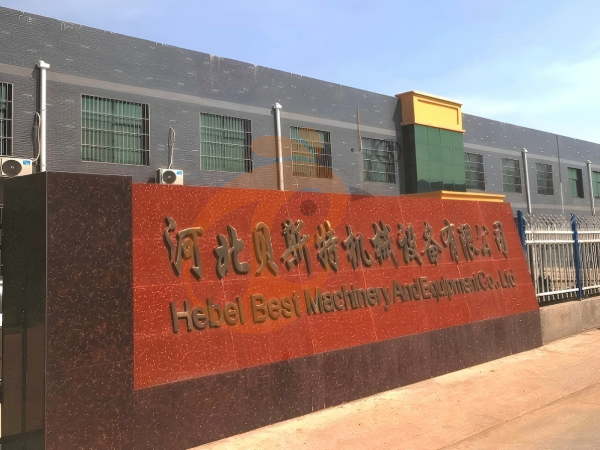
China Hebei Best Machinery And Equipment CO., LTD
Nigeria Vanke Machinery And Equipment CO., LTD
Tanzania Best Machinery And Equipment CO., LTD
Ethiopia Best Hebei Machinery Manufacturing PLC




Reception /24 WhatsApp NO. : +8618830120193
MESSAGE
Products recommended
 HK Headquarter Offers EU-standard Poultry Farm Solutions, Manufacture Poultry Farm Equipment1. Continuous communication with the EU and the US
2. China, Nigeria, Ethiopia, Tanzania branch companies and factories
3. The products’ quality is customized for local poultry farms
4. Poultry cage and poultry farm equipment stock for sale
5. 24 online reception Whatsapp NO. : +8618830120193,contact us to get full informationRead More China Branch Offer Poultry Farm Business Plan, Manufacture Poultry Farm Equipment1. Address: Flat/RM 2416, 24/F, Runxing Building, Youyi Nan Street, Shijiazhuang City, Hebei Province, China
2. Poultry cage and poultry farm equipment factory and stock for sale
3. Customized for local poultry farms
4. Quality and design are based on Euro
5. 24 online reception Whatsapp NO. : +8618830120193Read More Nigeria Branch Offer Poultry Farm Business Plan, Manufacture Poultry Farm Equipment1. Address: After Sinoma Office, 200 Meters Near Danco Filling Station, Lagos/Ibadan Expressway, Lagos State, Nigeria
2. Poultry cage and poultry farm equipment factory and stock for sale
3. Customized for Nigerian poultry farms
4. Quality and design are based on Euro
5. 24 online reception Whatsapp NO. : +8618830120193Read More Ethiopia Branch Offer Poultry Farm Business Plan, Manufacture Poultry Farm Equipment1. Address: WR93+FQ2, Addis Ababa, Ethiopia
2. Poultry cage and poultry farm equipment stock for sale
3. Customized for Ethiopian poultry farms
4. Quality and design are based on Euro
5. 24 online reception Whatsapp NO. : +8618830120193, contact us to get price listRead More Tanzania Branch Offer Poultry Farm Business Plan, Manufacture Poultry Farm Equipment1. Address: No.8, Sova Road, Msufini, Mlandizi, Kibaha, Pwani, Tanzania
2. Poultry cage and poultry farm equipment factory and stock for sale
3. Customized for Tanzanian poultry farms
4. Quality and design are based on Euro
5. 24 online reception Whatsapp NO. : +8618830120193Read More Automatic H Type Layer Battery Cage System1. 30,000-100,000+ layers/house chooses it
2. Structure type stacked 3-16 tiers range
3. Stocking density up to 17 birds/cage
4. Service life 25 years
5. Reception /WhatsApp NO. : +8618830120193Read More Automatic A Type Layer Battery Cage System1. 10,000-30,000+ layers/house chooses it
2. Lifespan 25+ years
3. Labor requirement 1 worker per 10,000 birds
4. Reduce disease rates by 15%-20%.
5. Reception /WhatsApp NO. : +8618830120193Read More Semi Automatic A Type Layer Battery Cage System1. 1,00-10,000+ layers/house chooses it
2. Egg breakage rate≤ 0.5%
3. Mesh spacing 2.5×2.5 cm
4. Egg collection floor slope 7–8°
5. Reception /WhatsApp NO. : +8618830120193Read More