Nigeria broiler battery cage 2026 is rapidly transforming poultry farming in Nigeria.
Population growth exceeding 230 million increases meat demand significantly.
Vertical farming allows better land use and higher bird density.
Controlled environments improve feed conversion ratio by 5-10%.
Separating birds from droppings reduces disease transmission effectively.
Advanced cage designs provide ergonomic access for harvesting.
Corrosion-resistant materials are essential for tropical climates.
Automation reduces labor intensity and ensures consistent production.
Evolution Of Broiler Housing Systems In Nigeria
Historically, Nigerian farmers relied on floor-based rearing.
Challenges such as coccidiosis, high labor costs, and land scarcity drove the shift to battery cages.
Broiler cages differ from layer cages by supporting rapid weight gain and providing wider access points for harvesting.
Nigeria broiler battery cage 2026 adoption is accelerating in commercial farms due to higher efficiency.
Key Drivers For Cage Adoption In 2026
Land scarcity: Vertical farming allows 3 to 4 times more birds per square meter.
Health management: Separating birds from droppings reduces disease by up to 40%.
Feed efficiency: Controlled environments reduce energy expenditure, improving FCR by 5-10%.
Climate adaptation: Designs address heat stress in ambient temperatures exceeding 35°C.
Automation readiness: H-type cages integrate easily with IoT and climate control systems.
Material Specifications For Tropical Longevity
In humid and coastal regions of Nigeria (Lagos, Ogun, Delta), corrosion is a critical concern.
Premium imported cages in 2026 use hot-dip galvanization, resisting high ammonia and humidity.
Hot-Dip Galvanization Vs Cold Galvanization
Data is for reference only. Swipe horizontally to view full table.
Material Components Table
Data is for reference only. Swipe horizontally to view full table.
Efficient Design Features For The Nigerian Climate
Efficiency is measured by handling heat stress and facilitating bird movement.
Nigeria broiler battery cage 2026 designs prioritize ventilation and cooling.
A-Type Vs H-Type Configurations
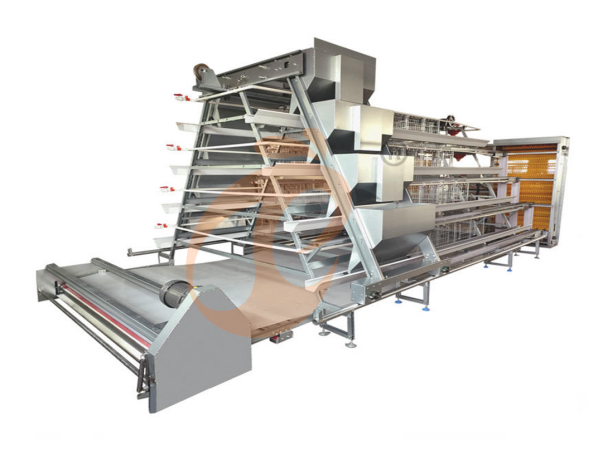
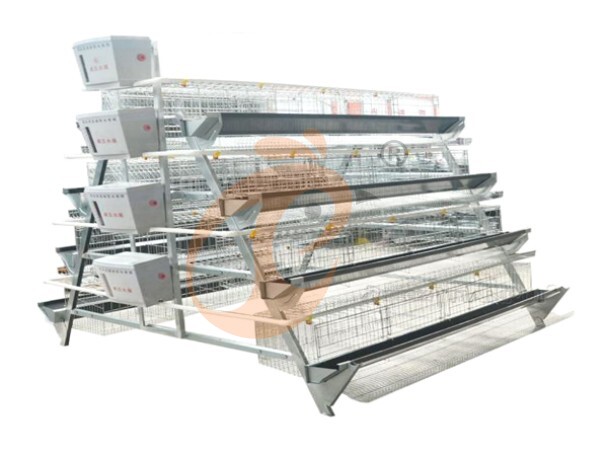
A-type (ladder): Preferred for natural ventilation; manure falls into a pit, suitable for open-sided houses.
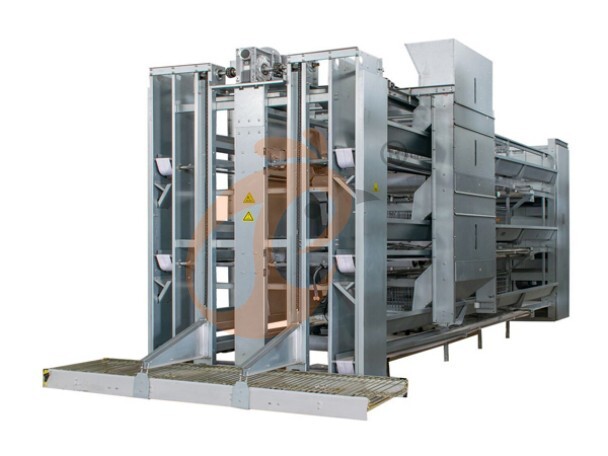
H-type (stacked): Suitable for fully automated climate-controlled houses; uses manure belts for immediate waste removal.
Technical Design Specifications
Data is for reference only. Swipe horizontally to view full table.
Market Price Analysis 2026: Nigeria Region
Pricing is influenced by steel prices, exchange rate, and local fabrication.
Imported cages remain quality benchmarks, but local fabrication has improved.
Estimated Price List By Capacity
Data is for reference only. Swipe horizontally to view full table.
Component Price Breakdown
Data is for reference only. Swipe horizontally to view full table.
IoT And Smart Farm Integration
IoT sensors monitor ammonia, temperature, and humidity in real-time.
Automated fans reduce mortality by 3–5%, while smart feeders improve FCR by 10–12%.
Solar-hybrid systems reduce diesel dependency; average farms save 15% energy.
Data-driven alerts enable rapid disease management and environmental adjustment.
Return On Investment (ROI) For A 10,000 Bird Project
Data is for reference only. Swipe horizontally to view full table.
Critical Challenges And Mitigation Strategies
Power Instability
Nigeria broiler battery cage 2026 systems, especially fully automated H-type setups, require continuous and stable electricity to operate feeders, manure belts, ventilation fans, and climate-control units.
Power fluctuations or outages can disrupt feeding schedules, reduce bird growth rates, and compromise animal welfare.
Mitigation strategy:
Install solar-hybrid inverters to supplement grid power.
Integrate automatic battery backup systems for emergency scenarios.
Smart controllers prioritize critical equipment during outages.
IoT sensors detect voltage drops and trigger real-time alerts.
Heat Stress Management
High-density broiler cages in tropical Nigeria generate significant body heat, combined with ambient temperatures above 35°C.
Mitigation strategy:
Use evaporative cooling pads along walls and inlets to reduce temperature by 5–8°C.
High-velocity circulation fans for uniform airflow across tiers.
Adjustable roof ventilation and side curtains in A-type houses.
Temperature sensors linked to automated fans and misting systems maintain 18–24°C.
High Import Costs And Supply Chain Challenges
Imported cage components, such as high-tensile wire mesh and hot-dip galvanized frames, face fluctuating exchange rates and shipping costs, increasing total investment by 15–25%.
Mitigation strategy:
Local assembly of heavy cage frames using imported mesh.
Strategic international procurement to lock material prices.
Modular cage designs simplify assembly and maintenance.
Bulk purchasing of consumables (PVC feed troughs, HDPE pipes) mitigates price volatility.
Frequently Asked Questions (FAQ)
Q1: How many cycles per year are typical for H-type cages?
A1: Typically 6–7 cycles, depending on climate and feed management.Q2: Can A-type cages be automated partially?
A2: Yes, semi-automated feeding and manure removal are possible.Q3: What is the average mortality rate for automated H-type cages?
A3: 1%–3% per cycle under proper management.
HB BEST - One Of China Largest Broiler Battery Cage Manufacturer
Global reach: Supplying poultry cage systems to farms worldwide.
Factory-direct sales: Reduces costs, improves delivery timelines.
Complete turnkey solutions: Includes poultry farm equipment, cages, and setup.
Data-driven design: Optimized for ROI and feed efficiency globally.
Engineering support: On-site installation and training for all farm operations.
Contact Us To Received Your Customized Poultry Farm Plan
Headquarters And Branchs

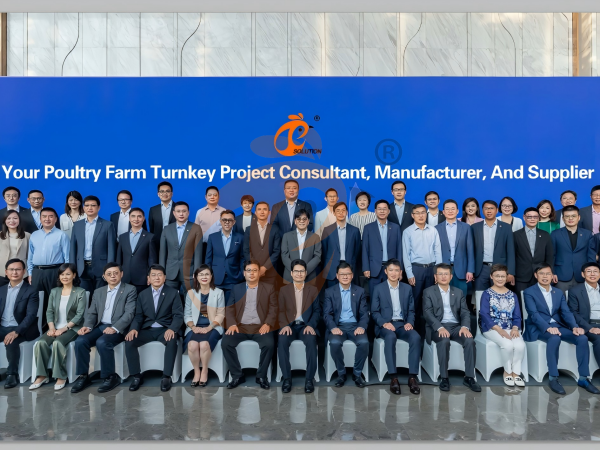
Hong Kong Headquarter Management Team
Hong Kong Headquarter Taiyu Industrial Group CO., LTD
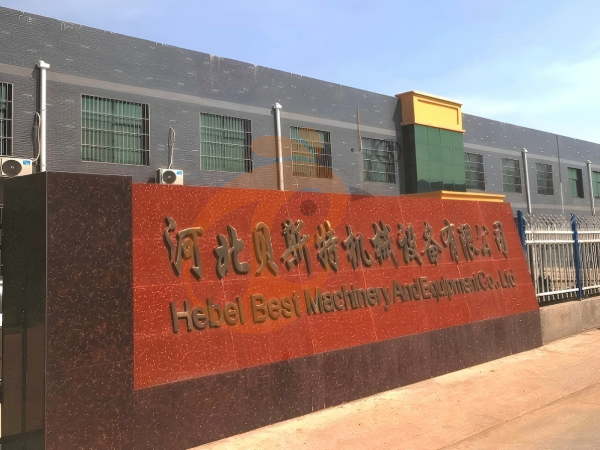
China Hebei Best Machinery And Equipment CO., LTD
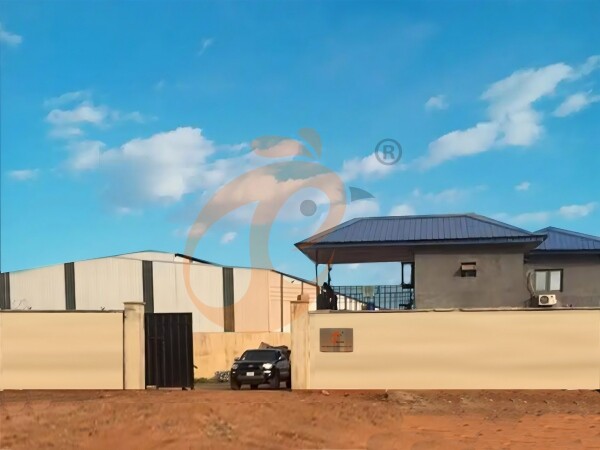
Nigeria Vanke Machinery And Equipment CO., LTD
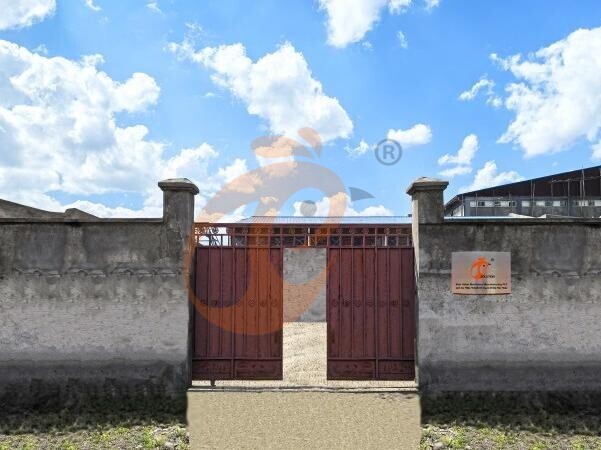
Tanzania Best Machinery And Equipment CO., LTD
Ethiopia Best Hebei Machinery Manufacturing PLC




Reception /24 WhatsApp NO. : +8618830120193
MESSAGE
Products recommended
 HK Headquarter Offers EU-standard Poultry Farm Solutions, Manufacture Poultry Farm Equipment1. Continuous communication with the EU and the US
2. China, Nigeria, Ethiopia, Tanzania branch companies and factories
3. The products’ quality is customized for local poultry farms
4. Poultry cage and poultry farm equipment stock for sale
5. 24 online reception Whatsapp NO. : +8618830120193,contact us to get full informationRead More China Branch Offer Poultry Farm Business Plan, Manufacture Poultry Farm Equipment1. Address: Flat/RM 2416, 24/F, Runxing Building, Youyi Nan Street, Shijiazhuang City, Hebei Province, China
2. Poultry cage and poultry farm equipment factory and stock for sale
3. Customized for local poultry farms
4. Quality and design are based on Euro
5. 24 online reception Whatsapp NO. : +8618830120193Read More Nigeria Branch Offer Poultry Farm Business Plan, Manufacture Poultry Farm Equipment1. Address: After Sinoma Office, 200 Meters Near Danco Filling Station, Lagos/Ibadan Expressway, Lagos State, Nigeria
2. Poultry cage and poultry farm equipment factory and stock for sale
3. Customized for Nigerian poultry farms
4. Quality and design are based on Euro
5. 24 online reception Whatsapp NO. : +8618830120193Read More Ethiopia Branch Offer Poultry Farm Business Plan, Manufacture Poultry Farm Equipment1. Address: WR93+FQ2, Addis Ababa, Ethiopia
2. Poultry cage and poultry farm equipment stock for sale
3. Customized for Ethiopian poultry farms
4. Quality and design are based on Euro
5. 24 online reception Whatsapp NO. : +8618830120193, contact us to get price listRead More Tanzania Branch Offer Poultry Farm Business Plan, Manufacture Poultry Farm Equipment1. Address: No.8, Sova Road, Msufini, Mlandizi, Kibaha, Pwani, Tanzania
2. Poultry cage and poultry farm equipment factory and stock for sale
3. Customized for Tanzanian poultry farms
4. Quality and design are based on Euro
5. 24 online reception Whatsapp NO. : +8618830120193Read More Automatic H Type Layer Battery Cage System1. 30,000-100,000+ layers/house chooses it
2. Structure type stacked 3-16 tiers range
3. Stocking density up to 17 birds/cage
4. Service life 25 years
5. Reception /WhatsApp NO. : +8618830120193Read More Automatic A Type Layer Battery Cage System1. 10,000-30,000+ layers/house chooses it
2. Lifespan 25+ years
3. Labor requirement 1 worker per 10,000 birds
4. Reduce disease rates by 15%-20%.
5. Reception /WhatsApp NO. : +8618830120193Read More Semi Automatic A Type Layer Battery Cage System1. 1,00-10,000+ layers/house chooses it
2. Egg breakage rate≤ 0.5%
3. Mesh spacing 2.5×2.5 cm
4. Egg collection floor slope 7–8°
5. Reception /WhatsApp NO. : +8618830120193Read More