- Free range poultry system combines controlled housing with outdoor access and measurable daily management for modern farms.
Seven daily checks cover feeding, drinking, ventilation, nesting, collection, safety, maintenance, and equipment performance from morning inspection through end-of-day records.
Automatic poultry feeding system improves delivery consistency across commercial flock operations while reducing repetitive manual handling with dependable motors and controllers.
Poultry drinking system supports reliable water distribution through regulated nipple lines, filtration, pressure control, and practical servicing for cleaner operation.
- Measured equipment parameters strengthen maintenance planning, labor efficiency, production continuity, system purchasing decisions, project engineering, expansion planning, and long-term farm performance requirements.
Get professional poultry farm construction guidance, equipment selection solutions, and the latest price lists, whatsApp to +8618830120193, click to learn more:
Start The Day With A Seven-Check Management Loop
A free range poultry system should begin each production day with a fixed equipment inspection sequence rather than relying on visual observation alone.
A practical operating cycle is 06:00–08:00, covering feeding, drinking, ventilation, nesting, egg transfer, outdoor access, and control equipment.
An integrated automatic poultry feeding system turns these checks into a repeatable management process instead of seven separate manual tasks.
The commercial objective is straightforward: identify equipment deviations before they interrupt flock management.
Operators can record motor sound, controller response, water movement, belt tracking, and access-door operation.
A structured inspection sheet taking approximately 10–15 minutes per house can provide a useful daily maintenance record.
Check No. 1 — Automatic Feeding System
Data is for reference only.Swipe horizontally to view full table.
During the morning inspection, confirm that the feed line starts according to the programmed sequence and that feed reaches the terminal section without interruption.
Free range poultry system management benefits from an automatic poultry feeding system that provides a consistent mechanical route from storage to the flock.
Automatic pan feeding can reduce repetitive manual distribution and provide a consistent mechanical route from storage to the flock.
Commercial installations can also connect feed delivery with centralized control panels.
Check No. 2 — Water Is A Production System, Not Just A Utility
Step A — Source: inspect the incoming water assembly.
Step B — Regulation: verify that the pressure-control unit responds correctly.
Step C — Distribution: activate several drinker points along the line.
Step D — End Point: inspect the final section for obstruction or leakage.
The objective is to verify the complete water path rather than checking one nipple in isolation.
A properly engineered poultry drinking system can combine filtration, pressure regulation, suspension adjustment, and flushing points.
For commercial free range poultry system installations, water treatment components can be positioned within a dedicated service area approximately 0.8–1.2 m from the main operating aisle.
Check No. 3 — Drinking Equipment Parameters
Data is for reference only.Swipe horizontally to view full table.
Daily inspection should include several points from the beginning, middle, and end of each drinking line.
The operator should look for dripping connections, irregular valve activation, and sediment accumulation around the filtration assembly.
A commercial poultry drinking system supplier can configure the water system around house dimensions, flock requirements, and local plumbing conditions.
Stainless-steel components, accessible regulators, and sectional isolation make routine servicing easier while supporting a more organized free range poultry system workflow.
Check No. 4 — Ventilation Through A Three-Moment Test
Morning Test
Inspect fan startup, inlet movement, and controller response before the flock enters its active period.
Record abnormal vibration or delayed activation.
Midday Test
During the warmest operating period, observe whether ventilation stages change according to sensor input.
The control cabinet should receive stable readings rather than depend entirely on manual switching.
Evening Test
Before outdoor access is reduced, verify the programmed ventilation sequence for the next operating period.
Backup ventilation should be tested according to the farm's maintenance schedule.
The commercial value of automated environmental equipment is its ability to coordinate fans, inlets, sensors, cooling components, and controllers.
A properly designed free range poultry system can continuously process environmental readings and activate predefined stages without requiring workers to manually operate every fan.
Check No. 5 — Ventilation & Environmental Control Data
Data is for reference only.Swipe horizontally to view full table.
The control strategy should connect environmental measurements with equipment action.
Operators can therefore inspect the displayed readings first and then verify whether the relevant fan, inlet, or cooling device responds to the programmed command.
For new free range poultry system projects, environmental equipment should be coordinated with building dimensions and airflow routes before construction begins.
This prevents later modifications to fan openings, electrical wiring, or controller placement.
Check No. 6 — Make Nest Inspection A Product-Quality Check
Inspect → Record → Correct → Confirm
First, inspect the nesting area for damaged components and misplaced materials.
Second, record the location of any abnormal egg accumulation.
Third, correct belt, nest, or access issues according to the equipment manual.
Finally, confirm that eggs can move from the nesting area toward the collection point without unnecessary handling.
Roll-away nesting systems are particularly valuable because the nest and egg-transfer functions can be integrated into a continuous collection workflow.
A commercial free range poultry system installation can use modular nest sections so that additional capacity can be incorporated into a future expansion plan.
Check No. 7 — Nesting & Egg Collection Equipment
Data is for reference only.Swipe horizontally to view full table.
The egg collection line should be inspected from the nest outlet through the transfer section to the collection area.
Belt alignment and drive movement should be observed during operation rather than inspected only when a stoppage occurs.
For farms selling commercial eggs, an organized free range poultry system can reduce repeated manual carrying and create a more direct connection between
laying areas and downstream grading or packing operations.
Equipment can also be configured around the farm's preferred collection-room layout.
Check No. 8 — Treat Outdoor Access As Part Of The Equipment System
Free-range production does not mean that outdoor movement should be unmanaged.
The transition between indoor and outdoor areas should be inspected as an engineered access route.
A practical service design can maintain approximately 1.0–1.5 m of clear maintenance access beside major equipment and movement points.
Use this simple operational question set:
Gate opens? → Gate closes? → Controller responds? → Fence connection intact?
Automatic doors, control units, fencing components, and access mechanisms should be selected as part of the complete free range poultry system.
This allows the supplier to coordinate mechanical installation with electrical routing and farm traffic patterns.
Check No. 9 — Outdoor Access & Structural Equipment
Data is for reference only.Swipe horizontally to view full table.
The structure should provide enough space for workers to reach motors, controllers, water assemblies, and other service points without disrupting bird movement.
Galvanized steel construction and modular framing can also support future system extensions.
When purchasing a complete free range poultry system, buyers should request structural drawings, equipment positioning plans, electrical diagrams, and
installation requirements before construction starts.
This makes the equipment supplier part of the project-engineering process rather than simply a hardware vendor.
Check No. 10 — End-Of-Day Maintenance Record
Data is for reference only.Swipe horizontally to view full table.
The end-of-day record should focus on measurable equipment conditions rather than comments such as ''normal'' or “good''.
Quantified records make recurring mechanical deviations easier to identify and provide useful information for preventive maintenance.
For free range poultry system manufacturers, this type of documentation also demonstrates engineering capability.
A complete supply package can include maintenance schedules, spare-parts lists, commissioning procedures, and operating instructions alongside the physical equipment.
Check No. 11 — Turn Seven Checks Into A Complete Poultry Equipment Solution
Data is for reference only.Swipe horizontally to view full table.
The seven daily checks become significantly more effective when feeding, drinking, ventilation, nesting, egg collection, access, and maintenance are designed as
one integrated free range poultry system project.
Each system should communicate operational requirements to the next instead of creating separate manual workflows.
For a new free-range farm or an existing farm modernization project, automatic poultry feeding system selection should begin with flock capacity, house
dimensions, climate, labor organization, and expansion requirements.
A professional poultry equipment manufacturer can then translate those requirements into equipment layouts, component specifications, control systems,
installation drawings, and commissioning support.
Frequently Asked Questions
Q1: What should be checked first in a free range poultry system?
Feed delivery and drinking equipment should be checked first because both directly support daily flock access to essential resources.
A practical morning inspection can be completed within 10–15 minutes per house when the system is organized into fixed checkpoints.
Q2: How does an automatic poultry feeding system improve farm operations?
An automatic poultry feeding system transfers feed mechanically from storage through the feeding line, reducing repeated manual distribution.
Motor current, feed movement, sensors, and controller timing should be reviewed according to equipment specifications rather than relying only on visual judgment.
Q3: Why is a poultry drinking system important for free range production?
A poultry drinking system provides controlled water delivery through filtration, pressure regulation, pipes, and nipple valves.
Routine inspection of the complete line helps identify leakage, blockage, and connection problems before they affect the free range poultry system.
Taiyu (HK) Group - One Of China Toppest Free Range Poultry System Manufacturer
Free range poultry system integrates feeding, drinking, ventilation, nesting, egg collection, and structural modules, with project configurations supporting 380–415 V / 3-phase electrical systems.
Global factory-direct supply covers complete poultry equipment packages, engineering drawings, component configuration, commissioning documentation, and international project coordination.
Turn-key engineering integrates equipment selection, house layout, installation planning, electrical interfaces, environmental controls, and production workflow into one coordinated project.
Project delivery supports commercial poultry farms requiring modular expansion, standardized spare parts, equipment documentation, and technical commissioning from factory to farm.
Export-oriented manufacturing provides coordinated poultry equipment solutions for different house dimensions, flock capacities, labor structures, climate conditions, and production objectives.
Contact Us To Received Your Customized Poultry Farm Plan
Headquarters And Branchs

Hong Kong Headquarter Management Team
Hong Kong Headquarter Taiyu Industrial Group CO., LTD
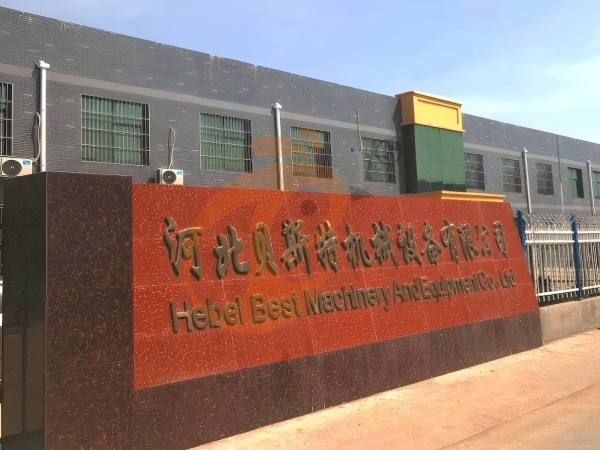
China Hebei Best Machinery And Equipment CO., LTD
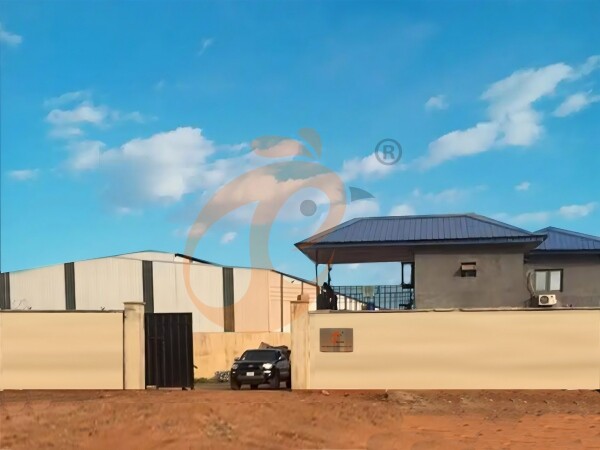
Nigeria Vanke Machinery And Equipment CO., LTD
Tanzania Best Machinery And Equipment CO., LTD
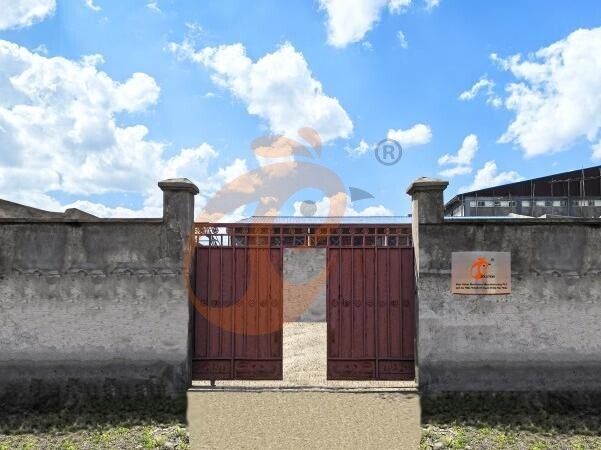
Ethiopia Best Hebei Machinery Manufacturing PLC




Reception /24 WhatsApp NO. : +8618830120193
MESSAGE
Products recommended
 HK Headquarter Offers EU-standard Poultry Farm Solutions, Manufacture Poultry Farm Equipment1. Continuous communication with the EU and the US
2. China, Nigeria, Ethiopia, Tanzania branch companies and factories
3. The products’ quality is customized for local poultry farms
4. Poultry cage and poultry farm equipment stock for sale
5. 24 online reception Whatsapp NO. : +8618830120193,contact us to get full informationRead More China Branch Offer Poultry Farm Business Plan, Manufacture Poultry Farm Equipment1. Address: Flat/RM 2416, 24/F, Runxing Building, Youyi Nan Street, Shijiazhuang City, Hebei Province, China
2. Poultry cage and poultry farm equipment factory and stock for sale
3. Customized for local poultry farms
4. Quality and design are based on Euro
5. 24 online reception Whatsapp NO. : +8618830120193Read More Nigeria Branch Offer Poultry Farm Business Plan, Manufacture Poultry Farm Equipment1. Address: After Sinoma Office, 200 Meters Near Danco Filling Station, Lagos/Ibadan Expressway, Lagos State, Nigeria
2. Poultry cage and poultry farm equipment factory and stock for sale
3. Customized for Nigerian poultry farms
4. Quality and design are based on Euro
5. 24 online reception Whatsapp NO. : +8618830120193Read More Ethiopia Branch Offer Poultry Farm Business Plan, Manufacture Poultry Farm Equipment1. Address: Gelan Gura, Akaki-kaliti Sub City, Addis Ababa, Ethiopia
2. Poultry cage and poultry farm equipment stock for sale
3. Customized for Ethiopian poultry farms
4. Quality and design are based on Euro
5. 24 online reception Whatsapp NO. : +8618830120193, contact us to get price listRead More Tanzania Branch Offer Poultry Farm Business Plan, Manufacture Poultry Farm Equipment1. Address: No.8, Sova Road, Msufini, Mlandizi, Kibaha, Pwani, Tanzania
2. Poultry cage and poultry farm equipment factory and stock for sale
3. Customized for Tanzanian poultry farms
4. Quality and design are based on Euro
5. 24 online reception Whatsapp NO. : +8618830120193Read More Automatic H Type Layer Battery Cage System1. 30,000-100,000+ layers/house chooses it
2. Structure type stacked 3-16 tiers range
3. Stocking density up to 17 birds/cage
4. Service life 25 years
5. Reception /WhatsApp NO. : +8618830120193Read More Automatic A Type Layer Battery Cage System1. 10,000-30,000+ layers/house chooses it
2. Lifespan 25+ years
3. Labor requirement 1 worker per 10,000 birds
4. Reduce disease rates by 15%-20%.
5. Reception /WhatsApp NO. : +8618830120193Read More Semi Automatic A Type Layer Battery Cage System1. 1,00-10,000+ layers/house chooses it
2. Egg breakage rate≤ 0.5%
3. Mesh spacing 2.5×2.5 cm
4. Egg collection floor slope 7–8°
5. Reception /WhatsApp NO. : +8618830120193Read More