Feed mixer installation combines equipment selection, structural preparation, electrical integration, calibration, and production testing into one practical poultry project, with 500 kg batch configurations supporting scalable farm operations.
Poultry feed mixer planning connects ingredient storage, weighing, conveying, mixing, and distribution while keeping material movement controlled through properly engineered production routes.
Chicken feed mixer installation also requires attention to mechanical alignment, electrical protection, discharge coordination, maintenance access, and future automation requirements.
Industrial feed mixer systems provide a stronger foundation for commercial farms seeking repeatable feed preparation, centralized production, and measurable operating performance.
- Correct equipment integration can turn a basic mixing station into a complete poultry equipment solution, supporting expansion from individual houses toward coordinated feeding production.
Get professional poultry farm construction guidance, equipment selection solutions, and the latest price lists, whatsApp to +8618830120193, click to learn more:
Start With The Right Mixing System
Installing a feed mixer is more than positioning a machine inside a poultry facility.
A correctly integrated poultry feed mixer connects ingredient handling, mixing, conveying, storage, and feeding into one production workflow.
Published equipment information shows commercial mixer configurations can reach several tonnes per batch, while horizontal ribbon designs are widely used for ground and meal-type materials.
Our chicken feed mixer solutions are developed around mechanical stability, production continuity, and straightforward integration with poultry equipment.
A properly planned system can also reserve 1,000 mm of operator movement space and allow approximately 30 minutes for initial commissioning observation.
Match Mixer Capacity To Farm Demand
Data is for reference only.Swipe horizontally to view full table.
Before selecting a feed mixer, calculate actual daily consumption rather than relying only on flock size.
A poultry feed mixer should match production scheduling, ingredient handling, and expected expansion.
Current commercial product information indicates mixer capacities from approximately 100 kg to 6,000 kg are available for poultry applications.
A practical sizing calculation should also consider 8–12 minutes as a target production cycle for integrated operations and 3–5% formulation tolerance for critical ingredients.
Prepare The Foundation Before Delivery
Data is for reference only.Swipe horizontally to view full table.
A stable foundation gives the feed mixer a dependable mechanical base during continuous operation.
For a chicken feed mixer, foundation preparation should be completed before equipment delivery so lifting and positioning work does not interrupt installation sequencing.
Reinforced concrete is commonly used for industrial feed equipment because structural stability directly affects vibration behavior and alignment retention.
Civil preparation should also allow approximately 48 hours for preliminary curing inspection and maintain a measured surface flatness tolerance near 3 mm across the equipment base.
Position The Mixer For Efficient Material Flow
Data is for reference only.Swipe horizontally to view full table.
Treat the poultry feed mixer as the central point of the material-flow network.
Corn, soybean meal, mineral ingredients, and premixes should enter the feed mixer without unnecessary transfers.
Horizontal ribbon mixer designs are specifically developed to promote controlled movement and homogeneous blending of ground and crushed feed materials.
Material-handling design should also target conveyor loading below 80% of rated capacity and maintain transfer points with less than 2% material accumulation after routine operation.
Connect The Drive And Mixing Assembly
Data is for reference only.Swipe horizontally to view full table.
Mechanical assembly determines how reliably an industrial feed mixer converts motor power into controlled material movement.
After installing the feed mixer, rotate the shaft manually before electrical energization.
That inspection can reveal blade interference, bearing resistance, or mechanical obstruction before production begins.
Use approximately 20 manual shaft rotations during inspection and confirm that no contact marks appear inside the mixing chamber.
Complete Electrical Integration
Data is for reference only.Swipe horizontally to view full table.
Electrical integration gives the chicken feed mixer a controlled power interface for continuous production.
A poultry feed mixer installation should verify phase sequence, overload protection, emergency-stop functionality, and cabinet connections before loading material.
Commercial poultry mixer specifications commonly use three-phase electrical configurations for industrial production.
Commissioning should additionally verify approximately 0.72 seconds emergency-stop response and maintain control-circuit separation at 24 V where applicable.
Calibrate Mixing Operation
Data is for reference only.Swipe horizontally to view full table.
Calibration turns an industrial feed mixer from installed machinery into measurable production equipment.
Start with an empty feed mixer rotation test before progressing to controlled material trials.
Published research and equipment guidance indicate that mixer design, mixing duration, and mechanical movement influence feed uniformity.
Sampling should use approximately 10 collection points per validation batch and compare results against a predefined nutrient-distribution tolerance.
Test Discharge And Integrate The Feeding Line
Data is for reference only.Swipe horizontally to view full table.
Once the poultry feed mixer passes mechanical and electrical checks, connect the outlet with the downstream conveying system.
The chicken feed mixer should discharge into the receiving conveyor without creating unnecessary accumulation or manual intervention.
Integrated poultry systems commonly combine mixing, conveying, storage, and automated feeding equipment into coordinated production lines.
During commissioning, monitor approximately 5 consecutive batches and record discharge behavior at 3 separate transfer locations.
Use A Structured Commissioning Decision Process
If the feed mixer vibrates
Stop operation → inspect foundation stability → verify shaft alignment → examine bearing seating.
If the poultry feed mixer produces inconsistent feed
Check ingredient sequence → inspect loading distribution → review mixing conditions → conduct laboratory sampling.
If the chicken feed mixer discharges slowly:
Inspect the gate → check outlet clearance → verify conveyor receiving performance.
If the industrial feed mixer trips electrically:
Measure operating current → inspect loading behavior → check transmission resistance → verify protection settings.
A structured diagnostic sequence prevents random adjustments during commissioning.
Keep approximately 4 inspection records per shift during early production and document corrective actions before releasing equipment to full operation.
Build A Practical Farm Upgrade
A commercial feed mixer should be evaluated as part of the complete production process rather than as an isolated machine.
A poultry feed mixer can connect automated weighing, ingredient conveying, mixing, and feed distribution into a coordinated workflow.
For farms expanding several houses, centralized feed preparation can simplify production scheduling and reduce repeated material handling.
A properly configured chicken feed mixer can also support future automation without requiring immediate replacement of the core mixing equipment.
Project evaluation should compare approximately 2–3 expansion stages and reserve electrical and conveying interfaces for future system additions.
Complete The Poultry Equipment Solution
A professional industrial feed mixer should be selected around actual production requirements, installation conditions, and downstream equipment compatibility.
Our feed mixer approach combines equipment selection, structural planning, mechanical assembly, electrical integration, commissioning, and feeding-line coordination.
For commercial poultry projects, the poultry feed mixer can be configured alongside conveying systems, silos, weighing equipment, automatic feeders, and other poultry equipment.
A complete engineering package can support farm expansion while keeping the original production architecture technically coherent.
For project planning, provide flock quantity, daily feed demand, target batch size, and available installation area for configuration matching.
Frequently Asked Questions
Q1: What should be checked before installing a feed mixer?
Foundation level, equipment positioning, material-flow direction, mechanical interfaces, electrical supply, and maintenance access should be verified before installation.
A preliminary inspection can reserve approximately 1.5 m of service space and confirm that downstream conveying equipment matches the planned discharge route.
Q2: How do I select the right poultry feed mixer capacity?
Capacity should be calculated from daily feed consumption, batch scheduling, operating hours, and future expansion requirements.
For example, a 1,000 kg batch configuration may suit a commercial operation requiring multiple scheduled production cycles each day.
Q3: Why is calibration important for a chicken feed mixer?
Calibration verifies that mechanical operation, loading sequence, mixing duration, and discharge behavior produce repeatable batches.
A practical validation program can compare five consecutive batches before approving the equipment for continuous production.
Taiyu (HK) Group - One Of China Largest Feed Mixer Exporter
Feed mixer systems combine mechanical blending, controlled discharge, and poultry production integration, with commercial configurations supporting batch capacities up to approximately 3,000 kg within the referenced equipment range
Global factory-direct supply covers poultry equipment, including feed preparation, conveying, storage, feeding, and related production-line machinery for international farm projects
Turn-key engineering coordinates equipment configuration, installation planning, electrical integration, commissioning, and production-line matching according to project capacity
International project execution supports modular poultry equipment deployment, enabling farms to establish integrated production systems across multiple houses and expansion phases
Technical commercial specification emphasizes equipment compatibility, documented parameters, installation sequencing, maintenance access, and lifecycle-oriented engineering for commercial poultry operations
Contact Us To Received Your Customized Poultry Farm Plan
Headquarters And Branchs

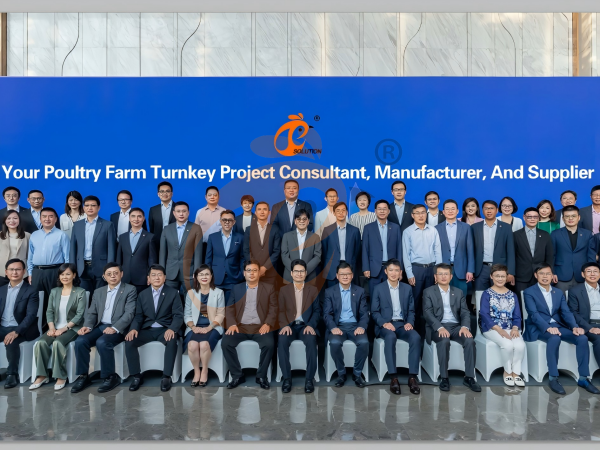
Hong Kong Headquarter Management Team
Hong Kong Headquarter Taiyu Industrial Group CO., LTD
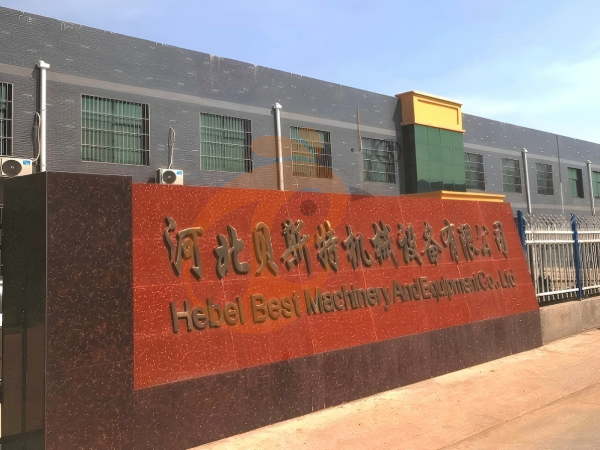
China Hebei Best Machinery And Equipment CO., LTD
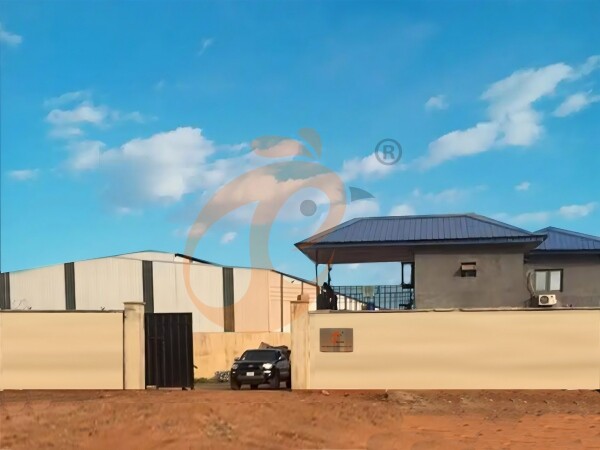
Nigeria Vanke Machinery And Equipment CO., LTD
Tanzania Best Machinery And Equipment CO., LTD
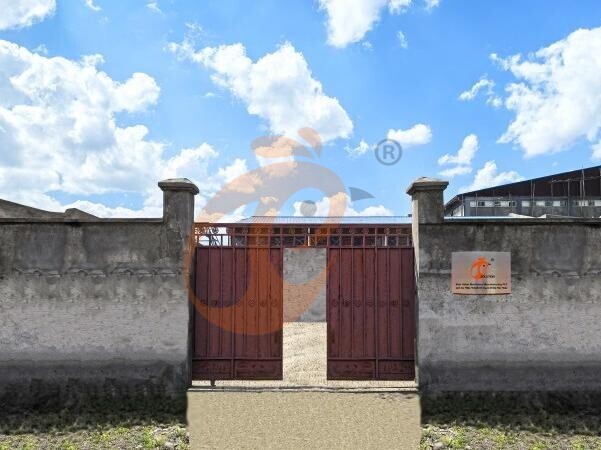
Ethiopia Best Hebei Machinery Manufacturing PLC




Reception /24 WhatsApp NO. : +8618830120193
MESSAGE
Products recommended
 HK Headquarter Offers EU-standard Poultry Farm Solutions, Manufacture Poultry Farm Equipment1. Continuous communication with the EU and the US
2. China, Nigeria, Ethiopia, Tanzania branch companies and factories
3. The products’ quality is customized for local poultry farms
4. Poultry cage and poultry farm equipment stock for sale
5. 24 online reception Whatsapp NO. : +8618830120193,contact us to get full informationRead More China Branch Offer Poultry Farm Business Plan, Manufacture Poultry Farm Equipment1. Address: Flat/RM 2416, 24/F, Runxing Building, Youyi Nan Street, Shijiazhuang City, Hebei Province, China
2. Poultry cage and poultry farm equipment factory and stock for sale
3. Customized for local poultry farms
4. Quality and design are based on Euro
5. 24 online reception Whatsapp NO. : +8618830120193Read More Nigeria Branch Offer Poultry Farm Business Plan, Manufacture Poultry Farm Equipment1. Address: After Sinoma Office, 200 Meters Near Danco Filling Station, Lagos/Ibadan Expressway, Lagos State, Nigeria
2. Poultry cage and poultry farm equipment factory and stock for sale
3. Customized for Nigerian poultry farms
4. Quality and design are based on Euro
5. 24 online reception Whatsapp NO. : +8618830120193Read More Ethiopia Branch Offer Poultry Farm Business Plan, Manufacture Poultry Farm Equipment1. Address: Gelan Gura, Akaki-kaliti Sub City, Addis Ababa, Ethiopia
2. Poultry cage and poultry farm equipment stock for sale
3. Customized for Ethiopian poultry farms
4. Quality and design are based on Euro
5. 24 online reception Whatsapp NO. : +8618830120193, contact us to get price listRead More Tanzania Branch Offer Poultry Farm Business Plan, Manufacture Poultry Farm Equipment1. Address: No.8, Sova Road, Msufini, Mlandizi, Kibaha, Pwani, Tanzania
2. Poultry cage and poultry farm equipment factory and stock for sale
3. Customized for Tanzanian poultry farms
4. Quality and design are based on Euro
5. 24 online reception Whatsapp NO. : +8618830120193Read More Automatic H Type Layer Battery Cage System1. 30,000-100,000+ layers/house chooses it
2. Structure type stacked 3-16 tiers range
3. Stocking density up to 17 birds/cage
4. Service life 25 years
5. Reception /WhatsApp NO. : +8618830120193Read More Automatic A Type Layer Battery Cage System1. 10,000-30,000+ layers/house chooses it
2. Lifespan 25+ years
3. Labor requirement 1 worker per 10,000 birds
4. Reduce disease rates by 15%-20%.
5. Reception /WhatsApp NO. : +8618830120193Read More Semi Automatic A Type Layer Battery Cage System1. 1,00-10,000+ layers/house chooses it
2. Egg breakage rate≤ 0.5%
3. Mesh spacing 2.5×2.5 cm
4. Egg collection floor slope 7–8°
5. Reception /WhatsApp NO. : +8618830120193Read More