A poultry farm is an agricultural facility where domesticated birds are raised for meat, eggs, breeding, and other agricultural products.
Commercial production combines suitable housing, balanced nutrition, clean water, ventilation, lighting, and disease prevention.
Depending on the production model, a farm may use manual equipment or automated systems to manage feeding, drinking, climate, and product collection.
Farm planning requires attention to building dimensions, bird age, floor-space allowance, feed consumption, and ventilation capacity.
These factors influence animal welfare, production performance, construction investment, and operating costs.
The following guide explains poultry farm operations, common bird species, commercial products, and important equipment parameters.
Poultry Farm Meaning And Definition
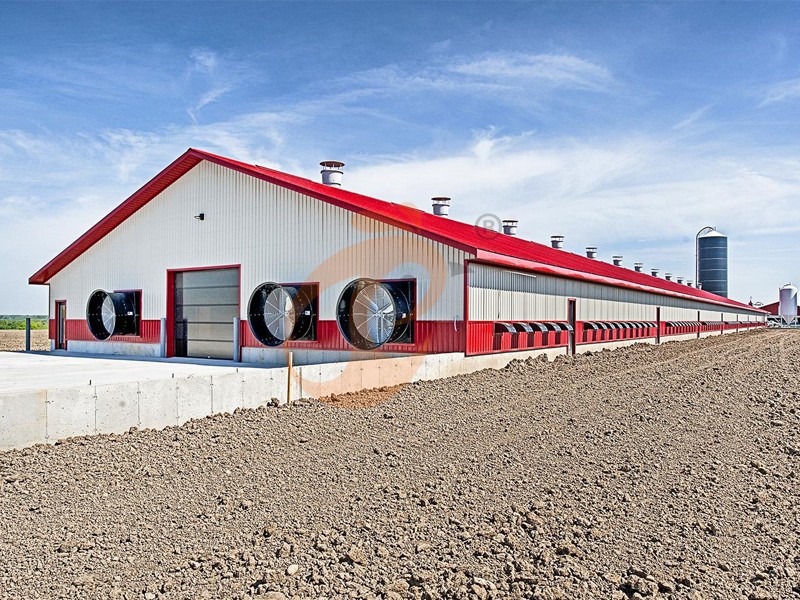
The poultry farm meaning describes an agricultural operation that raises domesticated birds under managed conditions for food or breeding.
Its daily activities include housing, feeding, watering, flock-health monitoring, product handling, and waste management.
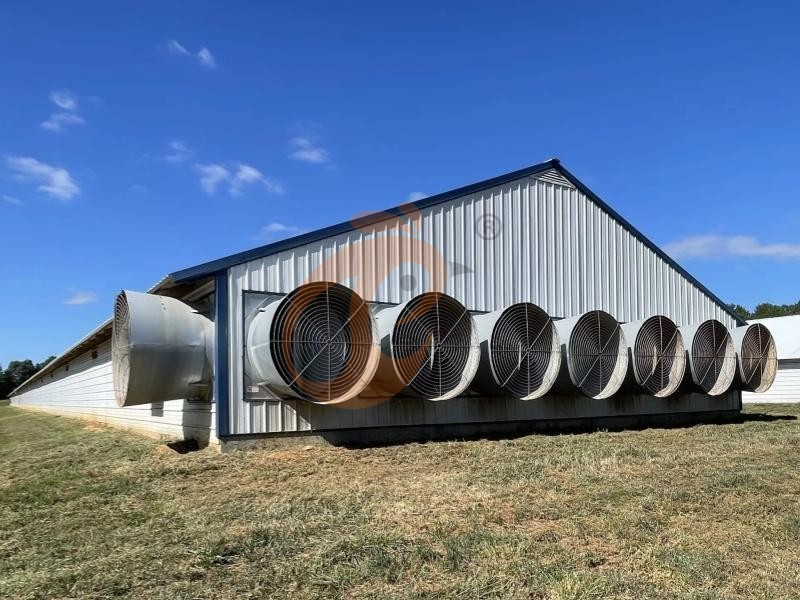
Commercial facilities may install automatic feeders, nipple drinkers, exhaust fans, and environmental controllers to maintain more consistent operating conditions.
Main Types Of Poultry Farms
The production system determines the equipment and management procedures required.
For example, brooding guidance for newly hatched chicks commonly starts near 30–32°c, while some commercial layer-management guidance uses approximately 22°c during later rearing.
Relative humidity, air movement, and bird behavior must also be considered when adjusting the environment.
Get professional poultry farm construction guidance, equipment selection solutions, and the latest price
What Animals Are Raised On A Poultry Farm?
Chickens are widely raised for meat and eggs, while ducks, geese, turkeys, and quail serve additional food and breeding markets.
Species selection depends on feed availability, housing design, local climate, market demand, and the farmer’s production objectives.
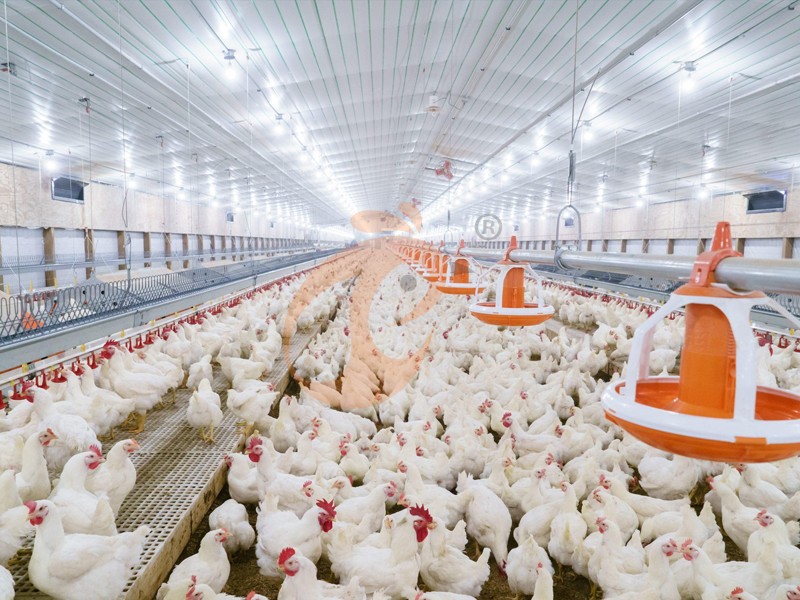
Housing And Feeding Parameters
Housing recommendations change with age, body size, bird type, and local regulations.
As one example, Saskatchewan government guidance lists chicken floor-space recommendations of 0.05 m² per bird at 0–3 weeks, 0.07–0.09 m² at 3–8 weeks, and 0.14–0.19 m² for birds older than 8 weeks.
These are reference recommendations, not universal commercial stocking-density limits.
Feed formulation must also match the bird’s growth stage.
University extension guidance commonly lists approximately 22–24% crude protein for some meat-type chick starter diets, 18–20% for certain finisher diets, and 16–18% for commercial layer diets.
These figures are examples; actual formulations should meet breed-specific nutrient requirements and local feed standards.
What Products Does A Poultry Farm Produce?
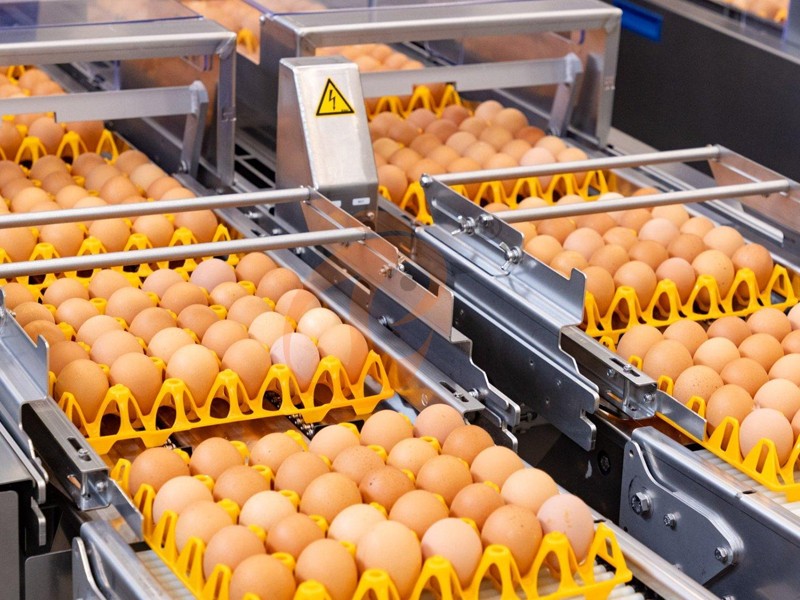
Poultry farms supply table eggs, meat, fertile eggs, day-old chicks, and poultry manure for appropriate agricultural use.
Product quality depends on flock health, feeding, handling, storage, hygiene, and traceability.
Incubation requires controlled temperature, humidity, ventilation, egg turning, and sanitation.
Mississippi state university extension guidance indicates that eggs in many forced-air incubation systems should be turned 4–6 times daily, with turning stopped at the appropriate stage before hatching.
The precise schedule varies by species and incubator design.
Table eggs and hatching eggs have different handling objectives.
Food eggs need suitable hygiene, grading, storage, and distribution, while hatching eggs require careful selection and storage to protect embryo development. Manure management also requires attention to nutrient content, moisture, storage, and local environmental rules.
For suitable feeding, drinking, ventilation, and climate-control systems, explore ourrange.
How Does A Poultry Farm Work?
A poultry farm follows a planned sequence from housing preparation and bird placement to daily care and product collection.
Recordkeeping helps farmers compare flock performance, identify unusual changes, and calculate operating efficiency.
Get professional poultry farm construction guidance, equipment selection solutions, and the latest price
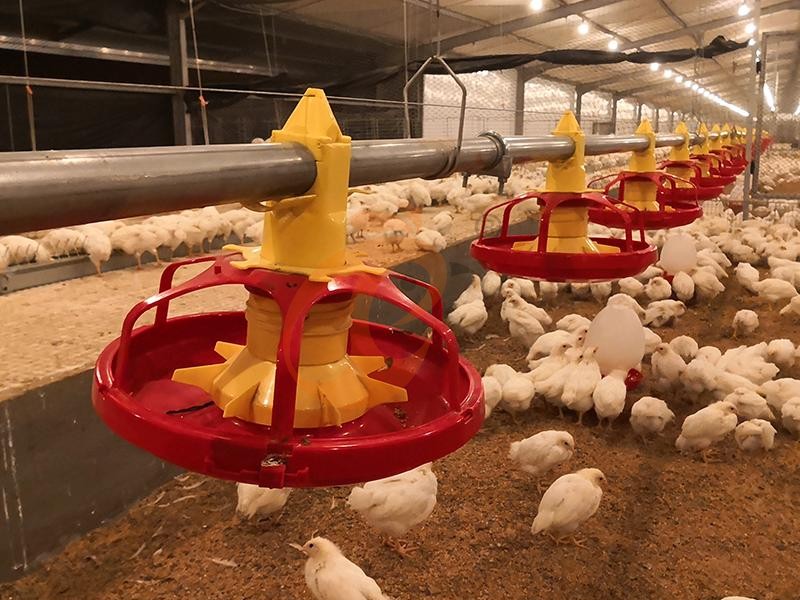
Essential Poultry Farm Equipment
Equipment sizing should use actual building dimensions, bird numbers, climate conditions, and manufacturer performance data.
For example, a design requiring 150,000 m³/h of airflow with fans rated at 25,000 m³/h each under the design operating conditions gives a theoretical requirement of 6 fans.
The final installation must also consider airflow resistance, seasonal demand, maintenance, and standby capacity.
Explore Poultry Farm Equipment and Products to review equipment options for different poultry housing and production requirements.
Poultry Farm Construction Costs
Construction budgets depend on location, building materials, insulation, automation, electrical infrastructure, water supply, and labor costs.
A reliable estimate should separate construction expenditure from equipment purchases and recurring operating expenses.
Before construction, assess local demand, feed supply, water quality, veterinary services, and animal-welfare requirements.
Compare quotations using the same scope of work, including installation, shipping, warranty, and maintenance.
This makes it easier to evaluate the total project cost rather than comparing equipment purchase prices alone.
Frequently Asked Questions
Q1. What is the main purpose of a poultry farm?
A1: A poultry farm raises domesticated birds for meat, table eggs, fertile eggs, or young-bird production.
The main objective determines the housing design, equipment selection, and production-management plan.
Q2. How much floor space do poultry birds need?
A2: Space requirements depend on species, age, body weight, housing design, and local rules.
For example, some government guidance recommends 0.05 m² per young chicken during early brooding, increasing to 0.14–0.19 m² for older birds.
Always verify the applicable local standard before setting flock capacity.
Q3. What equipment is needed to start a poultry farm?
A3: Common equipment includes feeders, drinkers, ventilation fans, heating or cooling systems, lighting, and environmental controllers.
A project budget should also account for electrical capacity, water storage, sanitation equipment, and maintenance requirements.
MESSAGE
Products recommended
 HK Headquarter Offers EU-standard Poultry Farm Solutions, Manufacture Poultry Farm Equipment1. Continuous communication with the EU and the US
2. China, Nigeria, Ethiopia, Tanzania branch companies and factories
3. The products’ quality is customized for local poultry farms
4. Poultry cage and poultry farm equipment stock for sale
5. 24 online reception Whatsapp NO. : +8618830120193,contact us to get full informationRead More China Branch Offer Poultry Farm Business Plan, Manufacture Poultry Farm Equipment1. Address: Flat/RM 2416, 24/F, Runxing Building, Youyi Nan Street, Shijiazhuang City, Hebei Province, China
2. Poultry cage and poultry farm equipment factory and stock for sale
3. Customized for local poultry farms
4. Quality and design are based on Euro
5. 24 online reception Whatsapp NO. : +8618830120193Read More Nigeria Branch Offer Poultry Farm Business Plan, Manufacture Poultry Farm Equipment1. Address: After Sinoma Office, 200 Meters Near Danco Filling Station, Lagos/Ibadan Expressway, Lagos State, Nigeria
2. Poultry cage and poultry farm equipment factory and stock for sale
3. Customized for Nigerian poultry farms
4. Quality and design are based on Euro
5. 24 online reception Whatsapp NO. : +8618830120193Read More Ethiopia Branch Offer Poultry Farm Business Plan, Manufacture Poultry Farm Equipment1. Address: Gelan Gura, Akaki-kaliti Sub City, Addis Ababa, Ethiopia
2. Poultry cage and poultry farm equipment stock for sale
3. Customized for Ethiopian poultry farms
4. Quality and design are based on Euro
5. 24 online reception Whatsapp NO. : +8618830120193, contact us to get price listRead More Tanzania Branch Offer Poultry Farm Business Plan, Manufacture Poultry Farm Equipment1. Address: No.8, Sova Road, Msufini, Mlandizi, Kibaha, Pwani, Tanzania
2. Poultry cage and poultry farm equipment factory and stock for sale
3. Customized for Tanzanian poultry farms
4. Quality and design are based on Euro
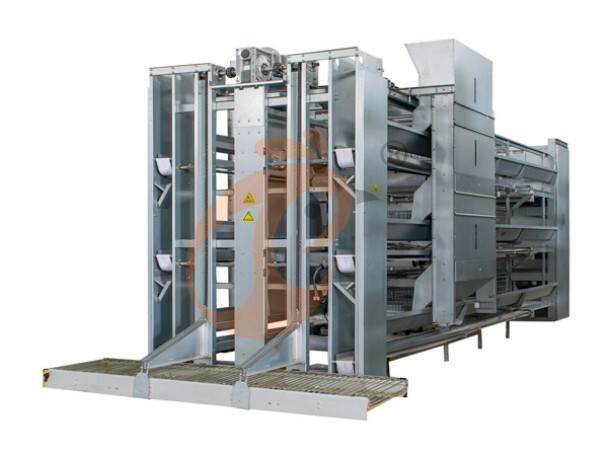
5. 24 online reception Whatsapp NO. : +8618830120193Read More Automatic H Type Layer Battery Cage System1. 30,000-100,000+ layers/house chooses it
2. Structure type stacked 3-16 tiers range
3. Stocking density up to 17 birds/cage
4. Service life 25 years
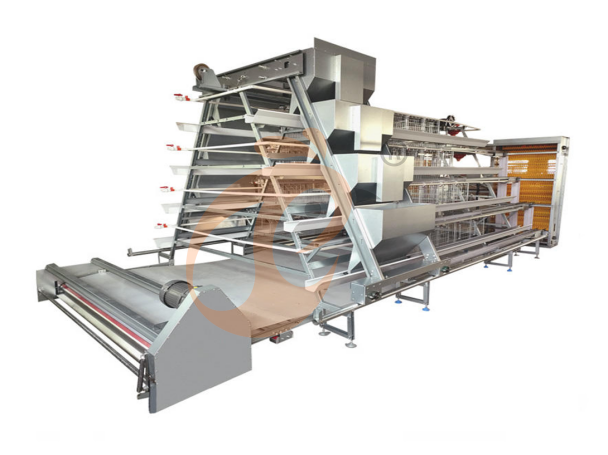
5. Reception /WhatsApp NO. : +8618830120193Read More Automatic A Type Layer Battery Cage System1. 10,000-30,000+ layers/house chooses it
2. Lifespan 25+ years
3. Labor requirement 1 worker per 10,000 birds
4. Reduce disease rates by 15%-20%.
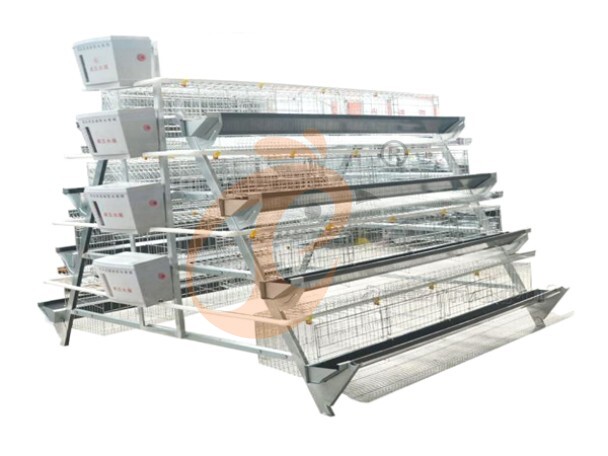
5. Reception /WhatsApp NO. : +8618830120193Read More Semi Automatic A Type Layer Battery Cage System1. 1,00-10,000+ layers/house chooses it
2. Egg breakage rate≤ 0.5%
3. Mesh spacing 2.5×2.5 cm
4. Egg collection floor slope 7–8°
5. Reception /WhatsApp NO. : +8618830120193Read More