Poultry farming is a specialized agricultural industry that supplies table eggs, chicken meat, fertile hatching eggs, and replacement birds.
Different production models require different building layouts, feeding programs, environmental controls, and equipment configurations.
Selecting the right system depends on production targets, local climate, labor availability, biosecurity requirements, and market demand.
The main types of poultry farms are layer farms, broiler farms, breeder farms, and pullet farms.
Each serves a different stage of the poultry supply chain.
Housing choices including cage-based, floor-raised, and free-range systems further determine equipment requirements, operating costs, and management procedures.
Layer Farms For Egg Production
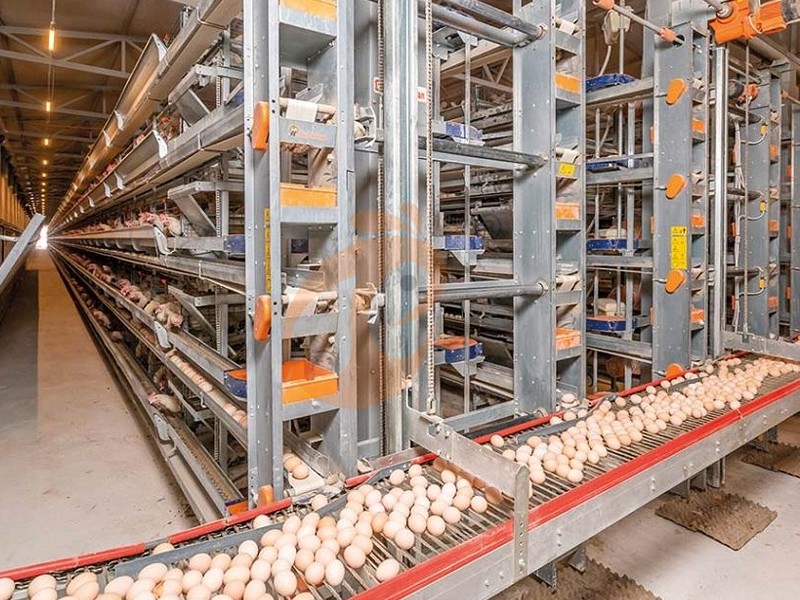
Layer farms specialize in producing eggs for commercial markets.
Depending on genetics, pullets generally begin laying at approximately 18–22 weeks, and the flock then progresses through early production, peak laying, and later production.
Managers monitor feed consumption, egg weight, laying rate, mortality, and shell quality to maintain consistent output.
A commercial layer project should coordinate bird housing, feeding, drinking, ventilation, lighting, manure removal, and egg collection.
For example, a 15,000-hen farm operating at an 88% laying rate would produce approximately 13,200 eggs per day before losses from cracked, dirty, or otherwise unsuitable eggs.
Actual results depend on flock age, breed, nutrition, and housing conditions.
Automatic egg collection reduces repetitive manual handling and helps move eggs from nests or cage systems to a central collection point.
Conveyor speed and grading capacity should match peak production instead of average output alone.
Egg belts, sorting tables, grading machines, and manure removal equipment should be specified together to avoid bottlenecks.
For commercial installations, integrated poultry farming equipment can combine feeding, egg collection, ventilation, and manure handling into a coordinated operating system.
A suitable design should also allow maintenance access, cleaning, and future capacity adjustments.
Get professional poultry farm construction guidance, equipment selection solutions, and the latest price lists, what’sApp to +8618830120193
Broiler Farms for Meat Production
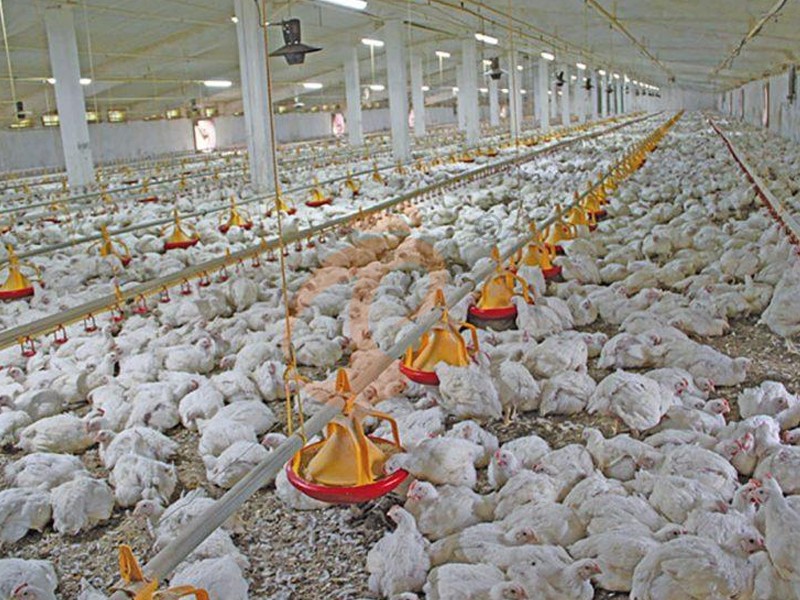
Broiler farms raise chickens for meat, with production programs designed around growth rate, feed efficiency, flock uniformity, and processing schedules. Depending on genetics and market specifications, birds may reach approximately 2.2–2.8 kg live weight within 35–49 days, while feed conversion, mortality, and carcass yield determine commercial performance.
Successful broiler production requires coordinated heating, ventilation, cooling, feeding, drinking, and litter management.
For example, a house accommodating 24,000 chicks should have a documented brooding plan, calibrated temperature sensors, and sufficient emergency ventilation capacity to protect birds during equipment failures.
The production cycle includes house preparation, chick placement, brooding, growth monitoring, catching, and transport to a processing facility.
Between flocks, operators should follow a written sanitation plan, verify cleaning effectiveness, and establish a downtime period appropriate to disease risk and local veterinary guidance.
Feed conversion ratio (FCR) measures the feed consumed relative to live-weight gain.
An fcr of 1.65 means that approximately 1.65 kg of feed is required for each kilogram of live-weight gain over the specified measurement period.
Comparisons should use consistent flock ages, weighing methods, and feed accounting procedures.
Breeder Farms For Hatching Egg Production
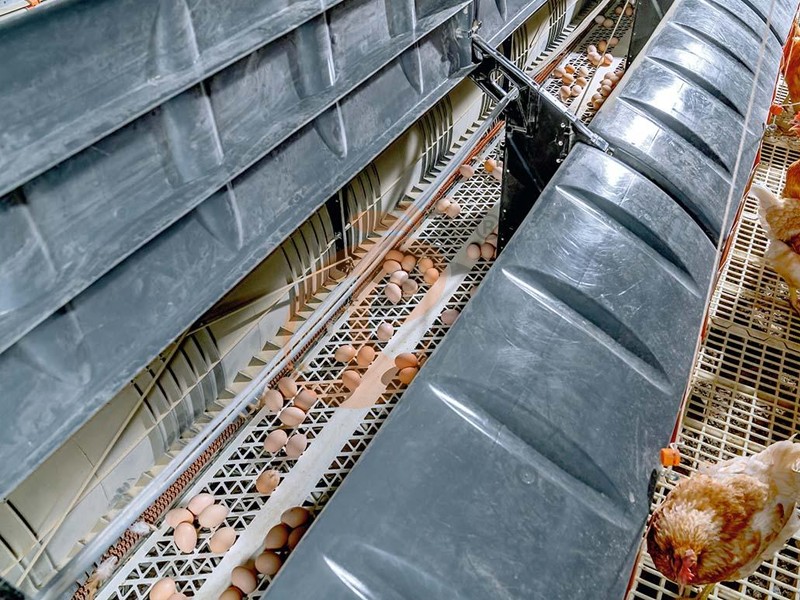
Breeder farms produce fertile eggs for hatcheries and require specialized management of male and female birds.
Production depends on body-weight control, mating activity, egg cleanliness, fertility, and hatchability, with flock performance assessed against the relevant genetic supplier's standards.
Breeding operations need carefully coordinated feeding equipment, nest systems, ventilation, egg handling, and biosecurity controls.
A project housing 8,000 breeding hens, for example, should establish a strain-specific male allocation plan, record egg collection times, and separate clean egg handling areas from dirty equipment routes.
Hatching eggs must be collected, sorted, identified, and stored under controlled conditions.
Prolonged storage, temperature fluctuations, rough handling, and contamination can reduce hatchability, so farm teams should follow hatchery-approved procedures rather than apply one temperature or storage limit to every situation.
Breeder farm records should link egg production, fertility, hatchability, mortality, and chick quality.
These measurements support earlier identification of reproductive problems and improve coordination between the breeder farm, egg transport team, and hatchery.
Integrated poultry farm equipment systems can combine nest management, automated feeding, egg conveyors, and environmental monitoring.
Project specifications should define conveyor capacity, cleaning access, electrical requirements, and installation responsibilities before equipment procurement.
Get professional poultry farm construction guidance, equipment selection solutions, and the latest price lists, what’sApp to +8618830120193
Pullet Farms for Raising Young Chickens
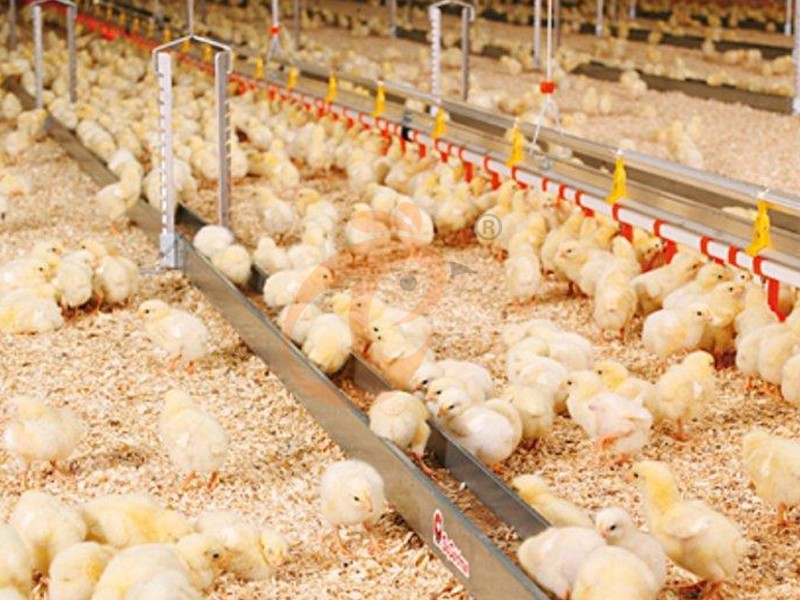
Pullet farms raise young female chickens until they are ready to enter layer or breeder production.
A well-designed rearing program coordinates feed formulation, water availability, vaccination, lighting, body-weight monitoring, and transfer preparation to establish a uniform flock.
During brooding, chicks need suitable heat, clean litter, and easy access to feed and water.
In a house designed for 6,500 day-old chicks, managers should verify heater output, drinker distribution, and chick-level temperatures before placement, then adjust conditions using bird behavior and environmental measurements.
Pullet uniformity is a major predictor of successful flock development.
Operators should weigh representative samples, investigate deviations from the breed's growth curve, and adjust nutrition or management before uneven development affects sexual maturity.
Before transfer, the receiving house should be prepared with functional feeders, drinkers, ventilation, and lighting.
For a planned transfer involving 4 transport vehicles, 2 receiving teams, and a documented delivery schedule, coordination can reduce waiting time and handling stress, provided transport capacity and animal-welfare requirements are satisfied.
Cage-Based, Floor-Raised, And Free-Range Systems
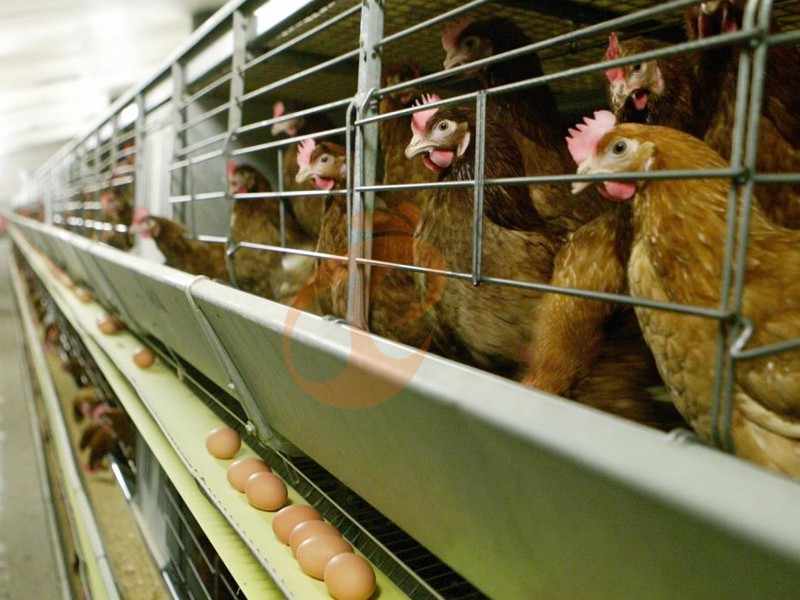
Housing design affects building dimensions, labor demand, equipment investment, hygiene, bird behavior, and regulatory compliance.
Cage-based systems, indoor floor-raised systems, and free-range operations each require a different balance of usable space, equipment access, environmental control, and daily supervision.
Cage-based housing can simplify centralized egg collection and manure removal where the system is legally permitted.
Floor-raised housing offers greater freedom of movement indoors but requires careful litter management, nest placement, and control of floor eggs.
Free-range projects add outdoor land requirements, fencing, weather protection, drainage, and additional disease-control measures.
Before construction, developers should check local stocking-density rules, outdoor-access standards, environmental permits, and buyer requirements.
How To Choose The Right Poultry Farm System
The appropriate farm type depends on the intended product, available land, market demand, technical experience, and investment plan.
A feasibility study should compare building costs, equipment capacity, energy consumption, labor, water availability, and projected output before finalizing the design.
Equipment prices vary with material grade, automation level, project capacity, shipping arrangements, and installation scope.
A reliable quotation should identify equipment quantities, rated performance, building interfaces, commissioning requirements, and warranty terms rather than quote a generic price per farm.
Frequently Asked Questions
Q1. What are the main types of poultry farms?
A1: The four primary categories are layer farms for table eggs, broiler farms for meat, breeder farms for fertile eggs, and pullet farms for replacement birds, each requiring different equipment, feeding programs, and production records.
Q2. How much space does a commercial poultry farm need?
A2: Space requirements depend on bird type, housing method, local welfare standards, and ventilation capacity; project planning should calculate usable floor area, equipment clearance, service access, and any required outdoor range before construction.
Q3. What equipment should be included in a poultry farm project?
A3: A commercial project typically requires feeders, drinkers, ventilation equipment, environmental controllers, and suitable heating or cooling; layer facilities additionally need egg collection systems, while breeder projects require nest equipment and pullet houses need age-appropriate brooding facilities.
Taiyu (HK) Group - One Of China Toppest Poultry Equipment Manufacturer
Poultry farm equipment integrates 18,000-bird feeding lines, 6 egg conveyors, and automated manure removal.
Global factory-direct poultry equipment serves 28,000-bird broiler houses with engineered ventilation and cooling.
Turn-key projects integrate 3,200 nest positions, 5 grading modules, and centralized environmental monitoring.
Pullet facilities combine 7 brooding zones, 9 drinker circuits, and automated growth-stage controls.
Engineering teams coordinate 2,400 m² buildings, 415v power systems, commissioning, and international installation support.
Contact Us To Received Your Customized Poultry Farm Plan
Headquarters And Branchs

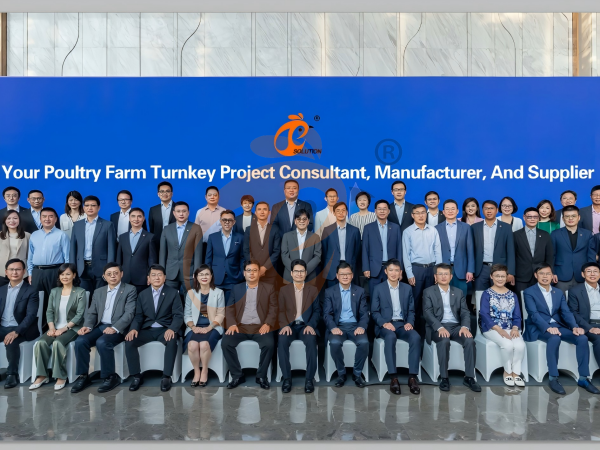
Hong Kong Headquarter Management Team
Hong Kong Headquarter Taiyu Industrial Group CO., LTD
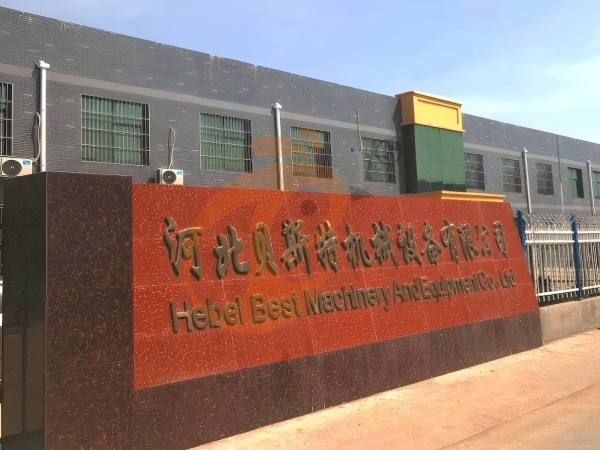
China Hebei Best Machinery And Equipment CO., LTD
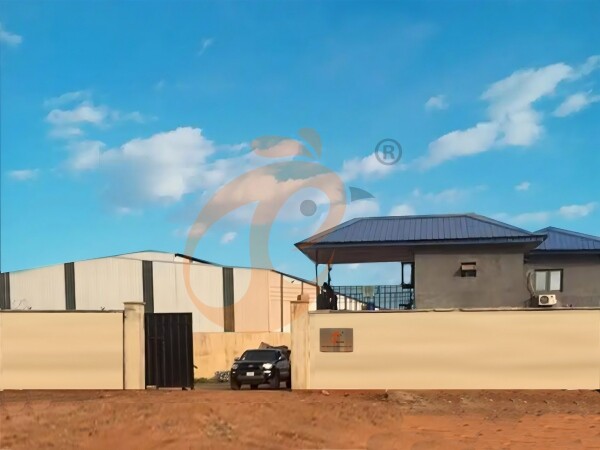
Nigeria Vanke Machinery And Equipment CO., LTD
Tanzania Best Machinery And Equipment CO., LTD
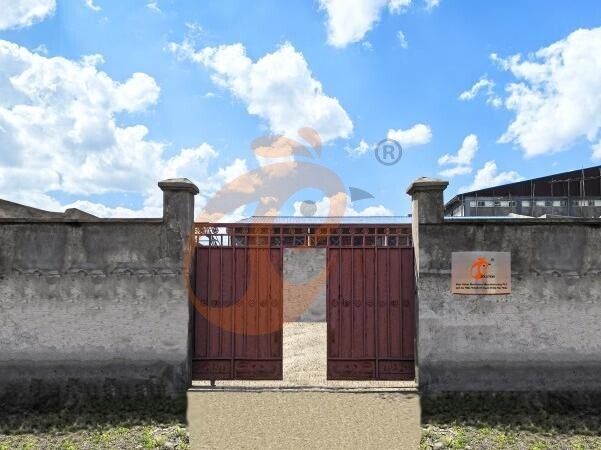
Ethiopia Best Hebei Machinery Manufacturing PLC




Reception /24 WhatsApp NO. : +8618830120193
MESSAGE
Products recommended
 HK Headquarter Offers EU-standard Poultry Farm Solutions, Manufacture Poultry Farm Equipment1. Continuous communication with the EU and the US
2. China, Nigeria, Ethiopia, Tanzania branch companies and factories
3. The products’ quality is customized for local poultry farms
4. Poultry cage and poultry farm equipment stock for sale
5. 24 online reception Whatsapp NO. : +8618830120193,contact us to get full informationRead More China Branch Offer Poultry Farm Business Plan, Manufacture Poultry Farm Equipment1. Address: Flat/RM 2416, 24/F, Runxing Building, Youyi Nan Street, Shijiazhuang City, Hebei Province, China
2. Poultry cage and poultry farm equipment factory and stock for sale
3. Customized for local poultry farms
4. Quality and design are based on Euro
5. 24 online reception Whatsapp NO. : +8618830120193Read More Nigeria Branch Offer Poultry Farm Business Plan, Manufacture Poultry Farm Equipment1. Address: After Sinoma Office, 200 Meters Near Danco Filling Station, Lagos/Ibadan Expressway, Lagos State, Nigeria
2. Poultry cage and poultry farm equipment factory and stock for sale
3. Customized for Nigerian poultry farms
4. Quality and design are based on Euro
5. 24 online reception Whatsapp NO. : +8618830120193Read More Ethiopia Branch Offer Poultry Farm Business Plan, Manufacture Poultry Farm Equipment1. Address: Gelan Gura, Akaki-kaliti Sub City, Addis Ababa, Ethiopia
2. Poultry cage and poultry farm equipment stock for sale
3. Customized for Ethiopian poultry farms
4. Quality and design are based on Euro
5. 24 online reception Whatsapp NO. : +8618830120193, contact us to get price listRead More Tanzania Branch Offer Poultry Farm Business Plan, Manufacture Poultry Farm Equipment1. Address: No.8, Sova Road, Msufini, Mlandizi, Kibaha, Pwani, Tanzania
2. Poultry cage and poultry farm equipment factory and stock for sale
3. Customized for Tanzanian poultry farms
4. Quality and design are based on Euro
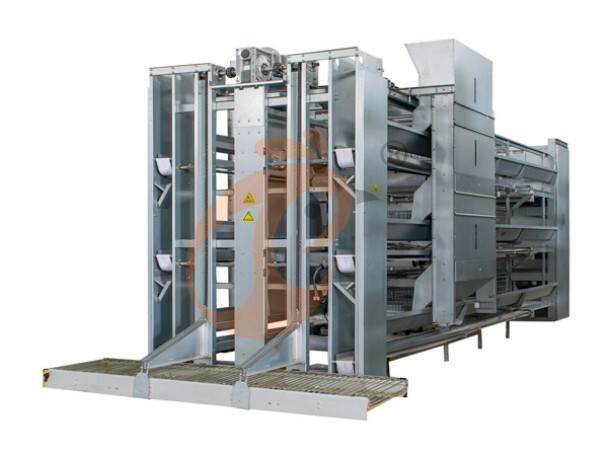
5. 24 online reception Whatsapp NO. : +8618830120193Read More Automatic H Type Layer Battery Cage System1. 30,000-100,000+ layers/house chooses it
2. Structure type stacked 3-16 tiers range
3. Stocking density up to 17 birds/cage
4. Service life 25 years
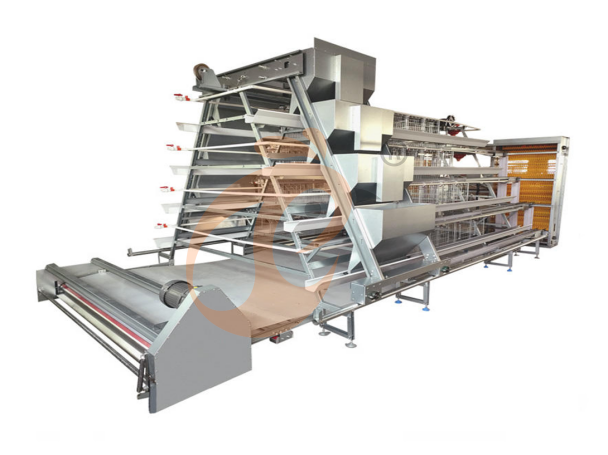
5. Reception /WhatsApp NO. : +8618830120193Read More Automatic A Type Layer Battery Cage System1. 10,000-30,000+ layers/house chooses it
2. Lifespan 25+ years
3. Labor requirement 1 worker per 10,000 birds
4. Reduce disease rates by 15%-20%.
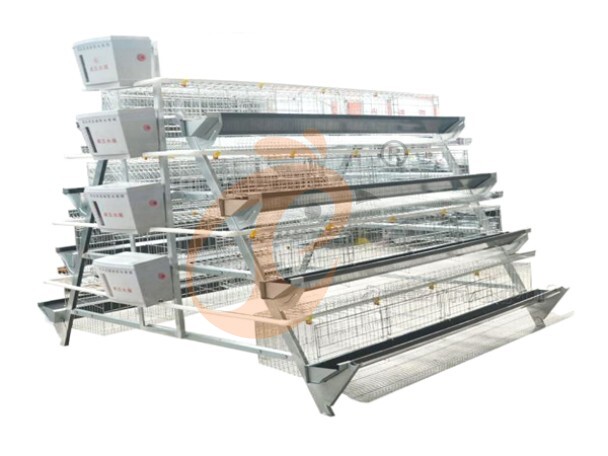
5. Reception /WhatsApp NO. : +8618830120193Read More Semi Automatic A Type Layer Battery Cage System1. 1,00-10,000+ layers/house chooses it
2. Egg breakage rate≤ 0.5%
3. Mesh spacing 2.5×2.5 cm
4. Egg collection floor slope 7–8°
5. Reception /WhatsApp NO. : +8618830120193Read More